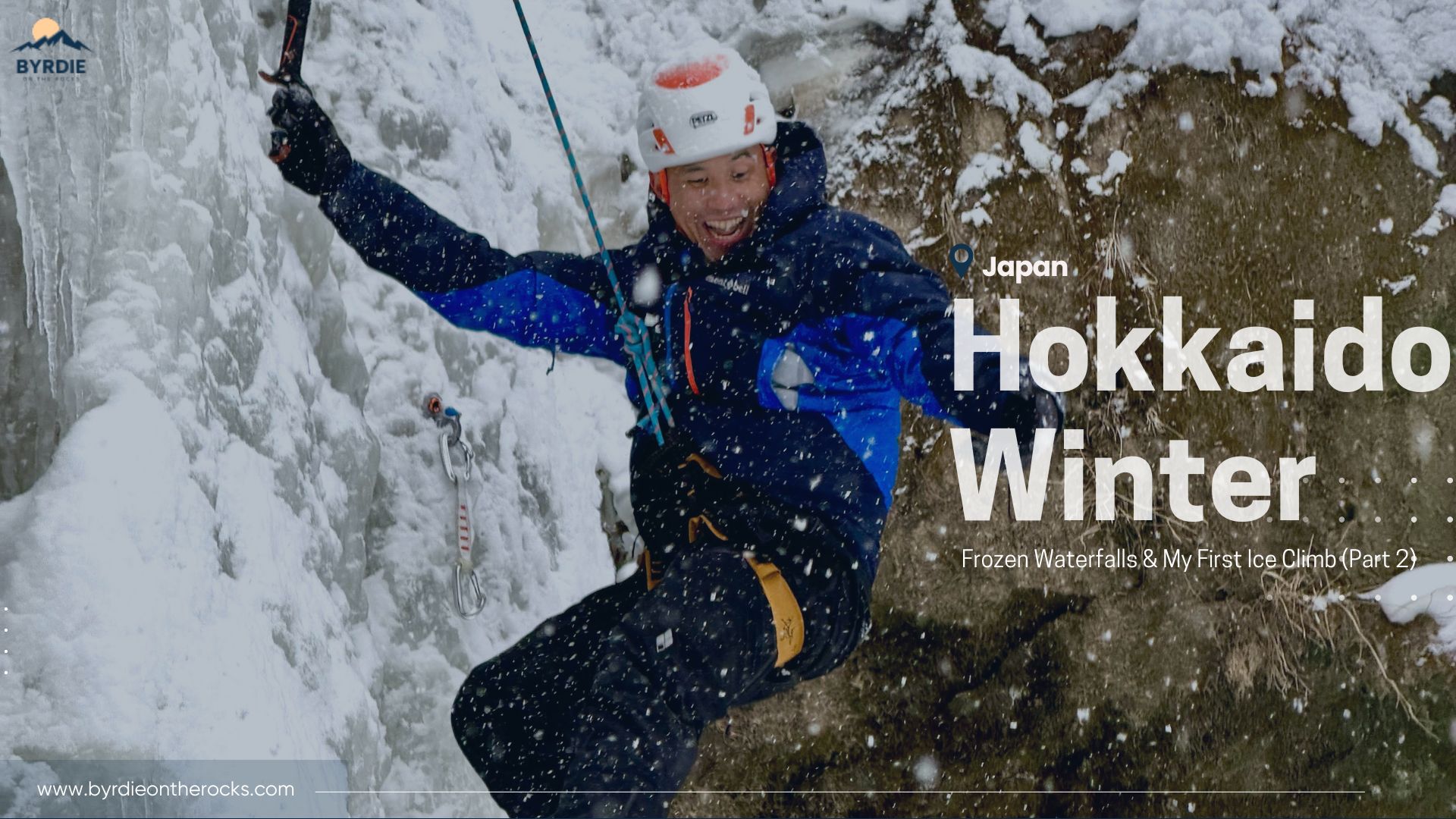
Hokkaido Ice Climbing Moments
Frozen Waterfall Highlights
🧭 Jump to a section
Welcome to ByrdieOnTheRocks
Hello friends, climbers, and curious wanderers. Welcome back to ByrdieOnTheRocks.
If you have been here before, you already know I like to start with a short intro and a few friendly
notes.
If you are new here, hi and welcome.
This is my little corner of the internet where I share travel stories, climbing experiences, and
personal reflections from a beginner climber who is still learning along the way. I am not a
professional climber and I do not write technical guides. What I share here is the real feeling
of discovering new places as someone who loves climbing, traveling, and learning web development
at the same time. It is a mix of chalk, code, curiosity, and honest experiences.
I sometimes include personal tips, but please always check the weather, consult certified guides,
and put safety first when planning any outdoor climbing trip.
Ice Climbing as a Tropical Climber
Climbing ice is not a common activity for climbers from tropical regions, so this trip introduced me
to many completely new experiences. It exposed me to a different style of climbing, unfamiliar
weather conditions, and outdoor activities during the winter season.
Coming from a place where climbing usually means warm rock and sunny weather, stepping into a frozen
winter landscape felt like entering a completely different world of climbing.
×
Want to see
how this trip started?
You can read Part 1 covering travel planning and preparation here
Read Part 1Part 2 of My Hokkaido Ice Climbing Journey
This blog is Part 2 of my Hokkaido ice climbing trip, where I share my experience of trying ice
climbing in Japan for the first time.
If you discovered this blog as a new climber curious about ice climbing in Hokkaido, or if you are
an experienced climber interested in learning more about the area, you can read
Part 1 of the trip
where I shared details about travel planning, preparation, and how I ended up joining this adventure
as an amateur climber.
In Part 1, I covered:
- Travel planning
- Preparation for winter climbing
- Getting to Hokkaido
- What it was like arriving with no prior ice climbing experience
What to Expect in Part 2
Part 2 focuses more on the actual climbing experience and what it was like trying ice climbing in
Japan for the very first time.
As I briefly mentioned earlier, this trip introduced me not only to ice climbing but also to a small
taste of alpine-style activities, including hiking through snow and approaching frozen waterfalls in
winter conditions.
For someone with no prior experience climbing ice, the entire experience felt completely new and
surprisingly exciting. It opened my eyes to a different side of climbing that I had never imagined
myself enjoying before.
About Our Guide and Trip Planning
This two day climbing trip was carefully organized and beautifully planned by our certified
instructor and guide, QX. You can find more information about him here. I also shared more details
about him in
my Taiwan climbing blog
.
The itinerary was designed for beginners like us who had no previous ice climbing experience. The
goal of the trip was to give us a proper introduction to ice climbing because climbing ice is very
different from rock climbing. Some people may enjoy it immediately while others may find it
challenging, not only because of the climbing itself but also because of the winter conditions.
Unlike rock climbing, you spend long hours outside in temperatures below freezing, sometimes with
wind and snow. If you are not prepared, the experience can quickly become uncomfortable.
From my personal experience, I strongly recommend doing research on winter gear before coming. One
thing I wish I had prepared better was waterproof gloves. Bringing two or even three pairs would
make a huge difference and make the climbing experience much more enjoyable.
Ice Climbing Location in Sounkyo
The ice climbing location is in the
Sounkyo area
, which is also well known for its onsen. However,
we stayed in
Asahikawa
, which is roughly 70 km away and about a one and a half hour drive depending
on weather conditions.
I shared more details about my stay in Asahikawa in
Part 1 this blog
.
Personally, I think staying in Asahikawa is the better choice because it is much more convenient in
terms of food options and transportation back to larger cities like Sapporo. Sounkyo is beautiful
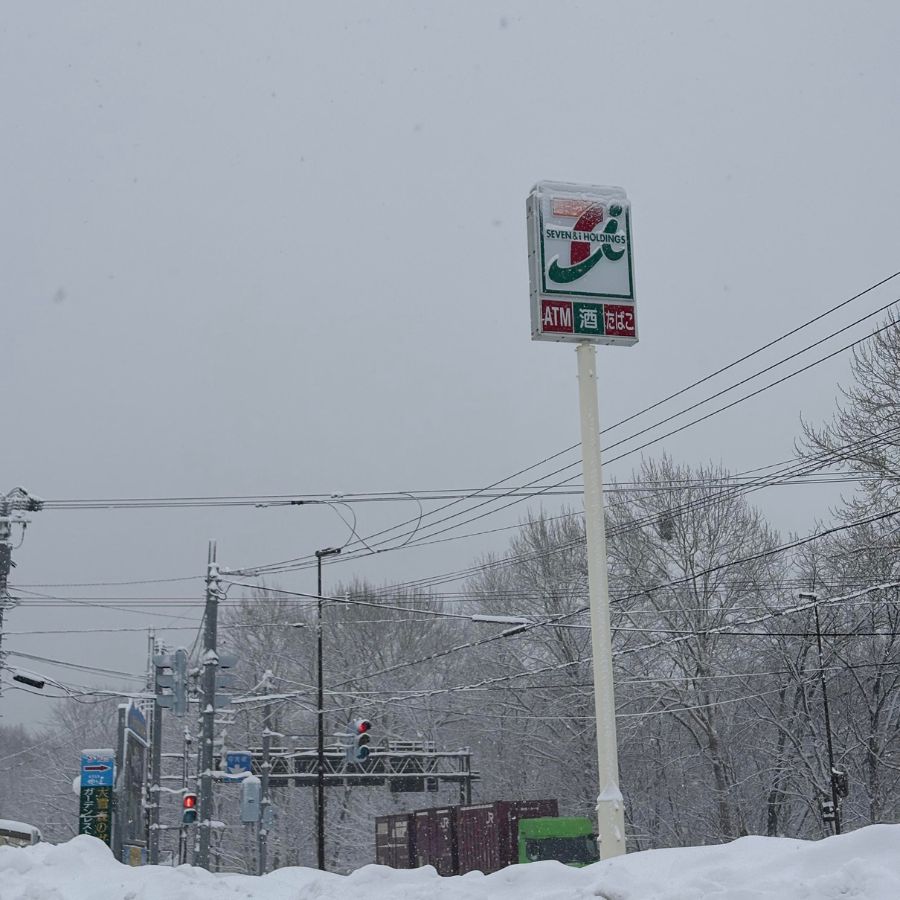
and relaxing, but it is very quiet and quite small. From what I saw, there was only one convenience
store in the area.
Hotel prices can also be quite high during the winter season. Because of that, staying in Asahikawa
and traveling to the climbing locations with QX each day worked very well for us.
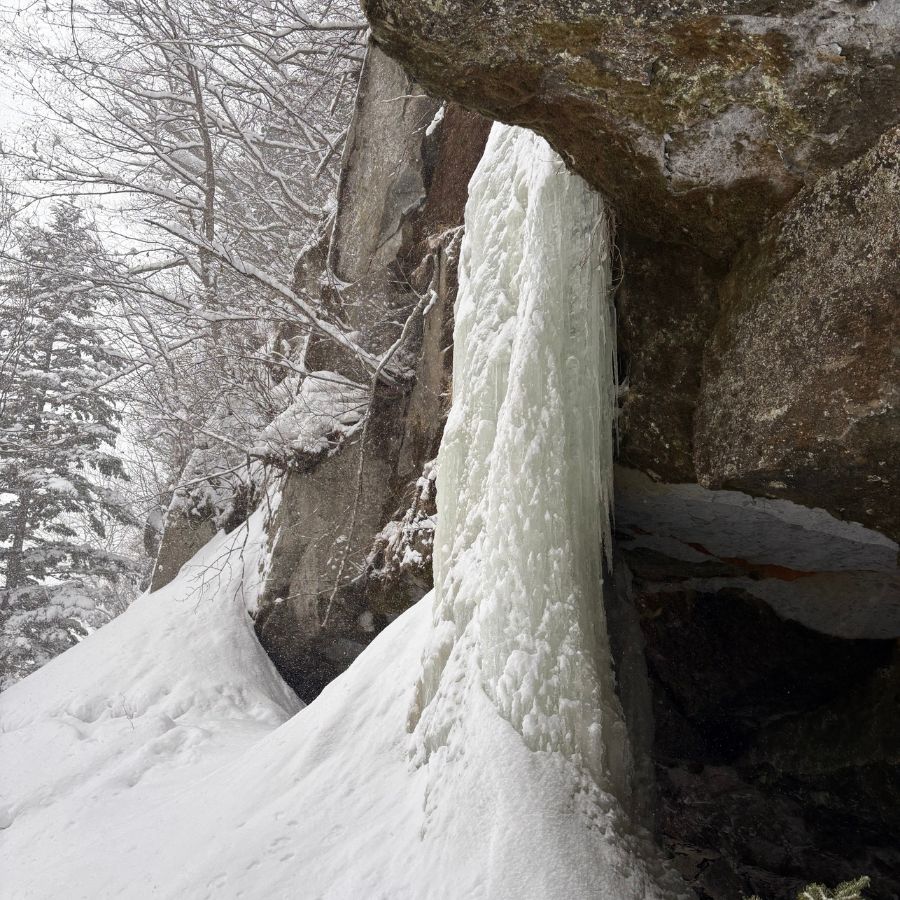
A Scenic Winter Drive Through the Mountains
For me, the drive itself was also one of the highlights of the trip.
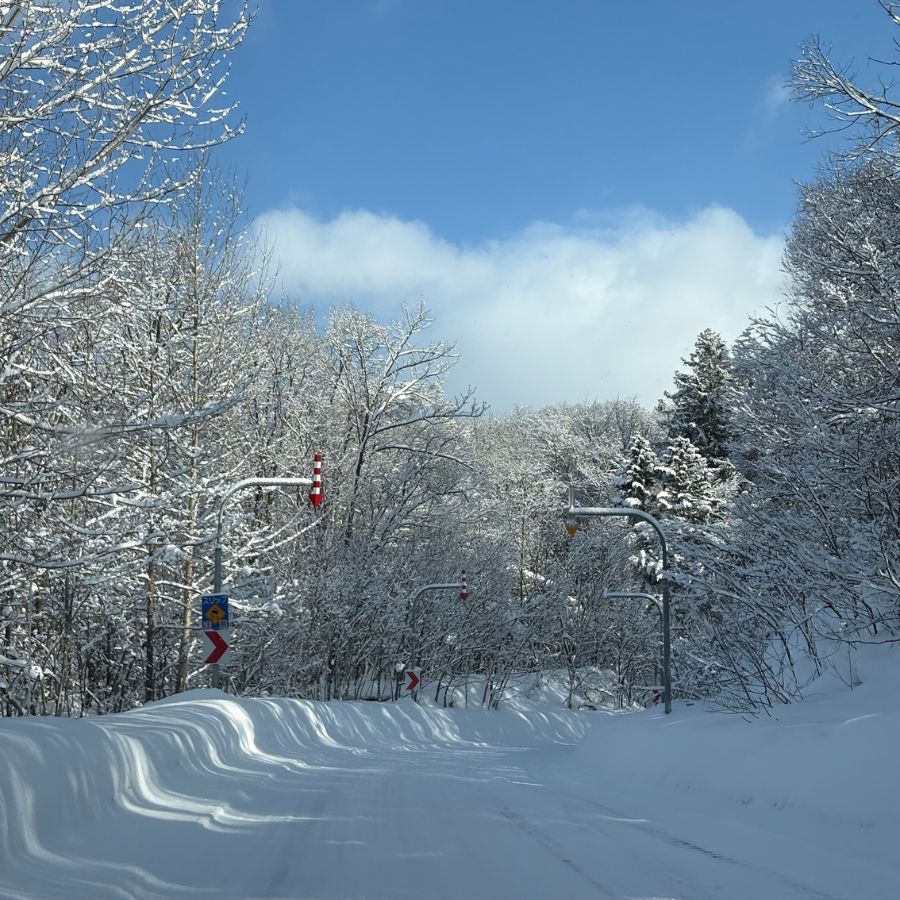
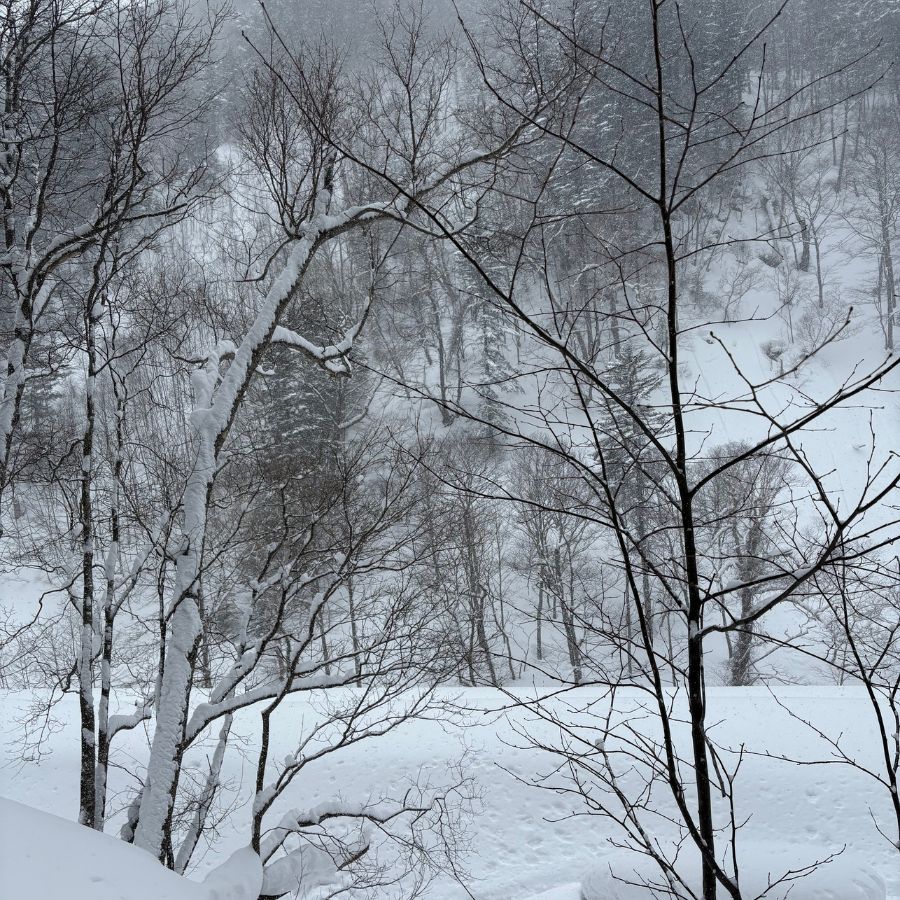
Coming from a tropical country, I rarely experience this type of winter scenery. Sitting in the car
and driving through the snowy mountains of Japan felt incredibly peaceful. The snow covered trees,
quiet roads, and white mountain landscape created a calm atmosphere that is difficult to describe.
It was one of those moments where you simply sit quietly and enjoy the view.
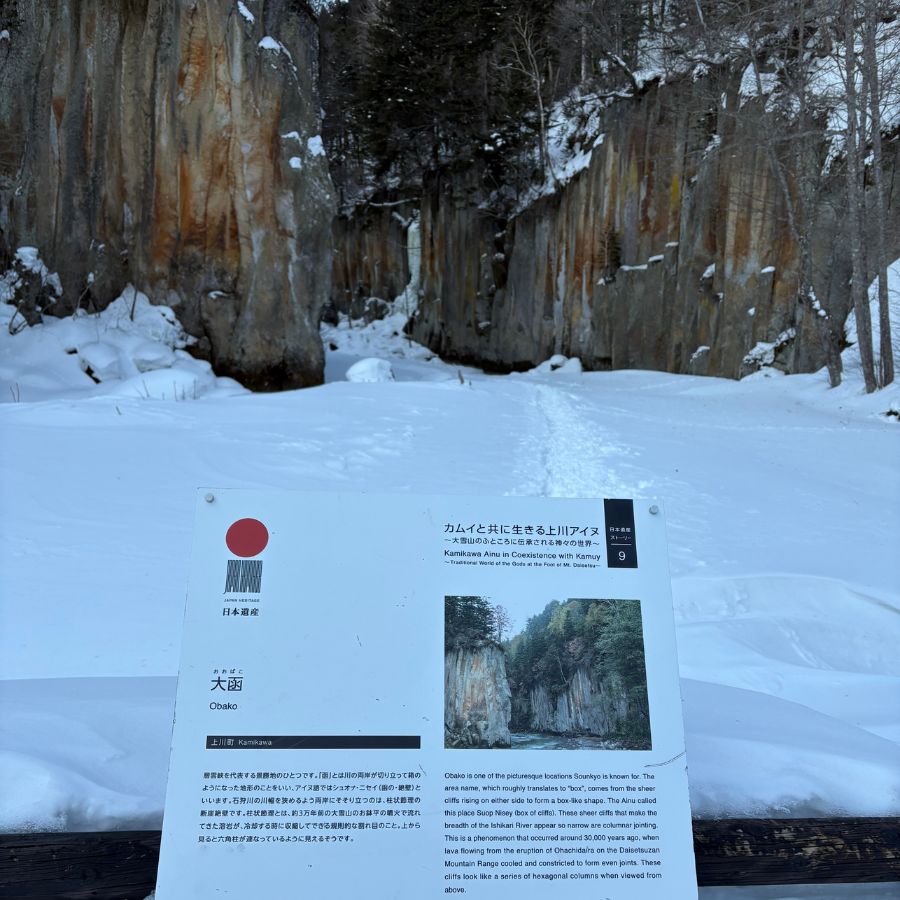
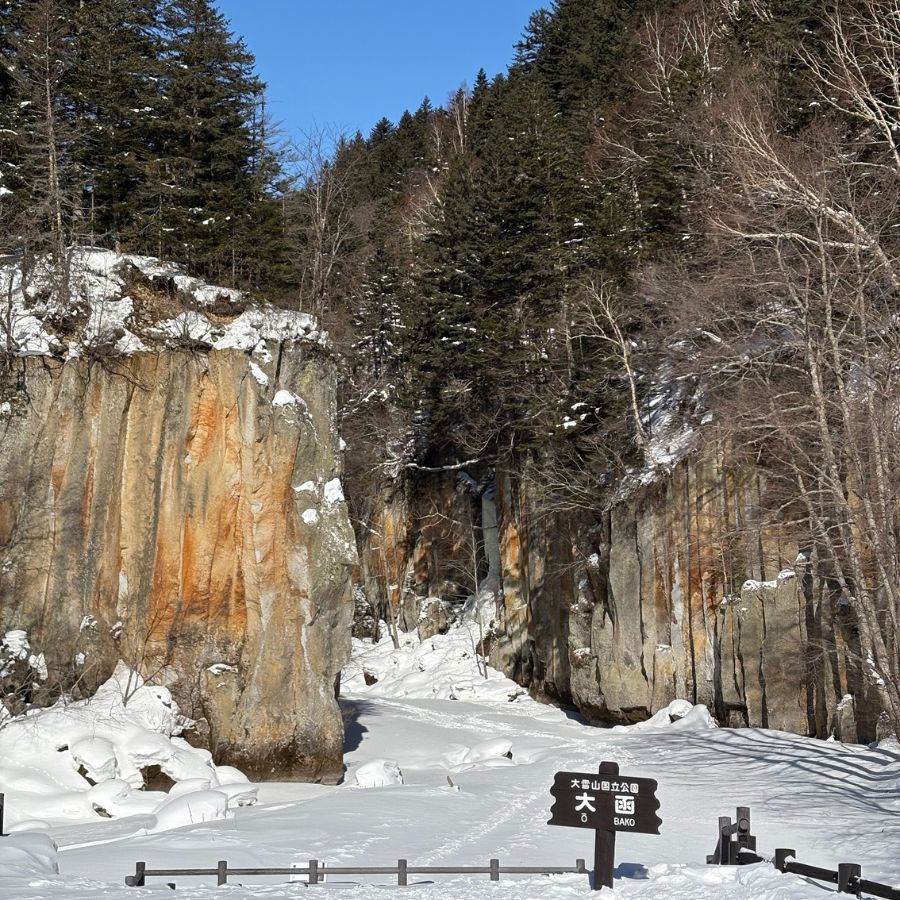
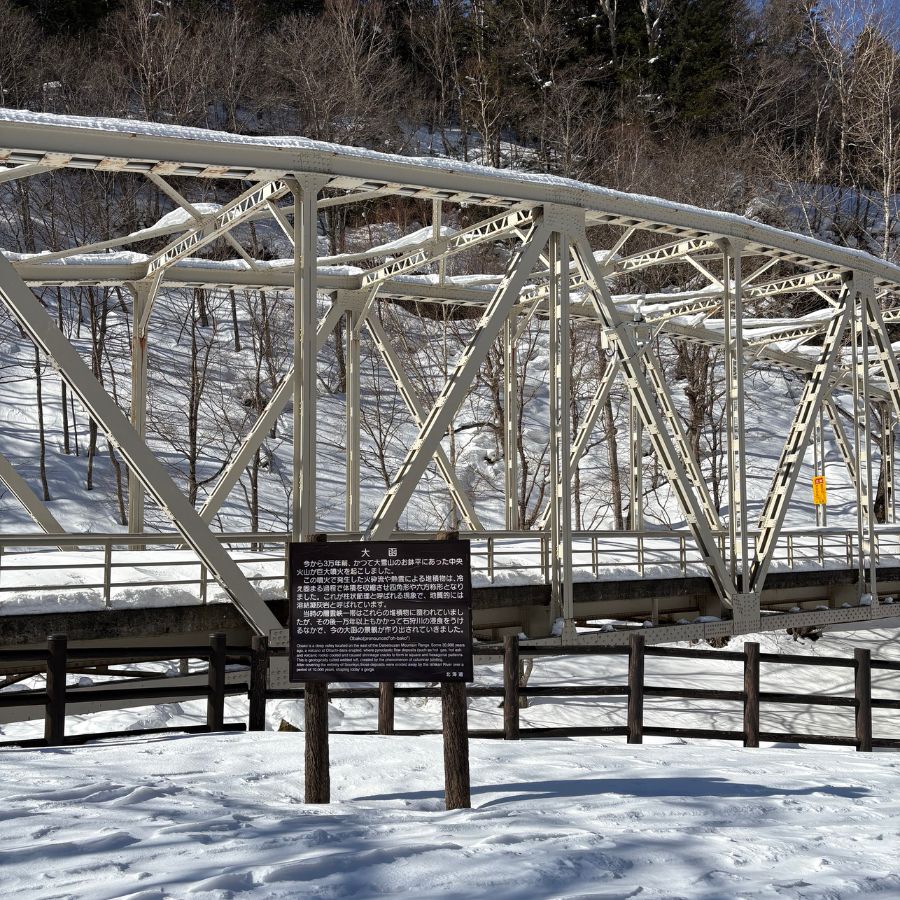
Day One Ice Climbing in Obako
On the first day we climbed in an area called
Obako
, which is one of the most beautiful and popular
spots in Sounkyo.
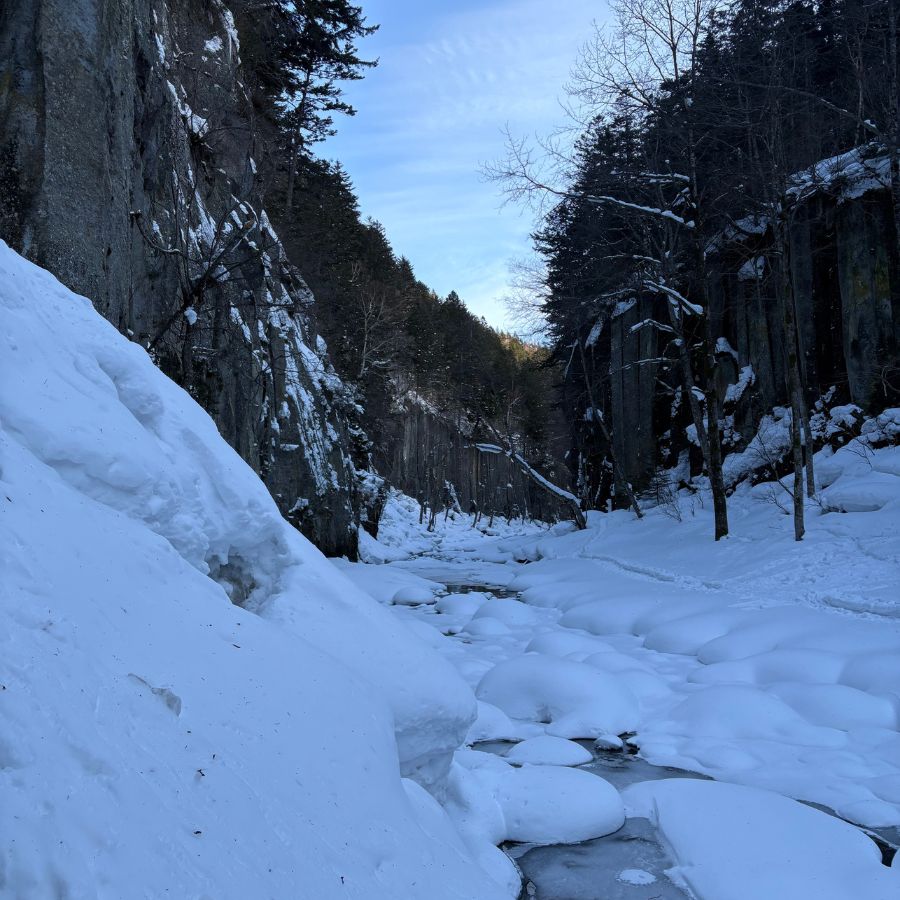
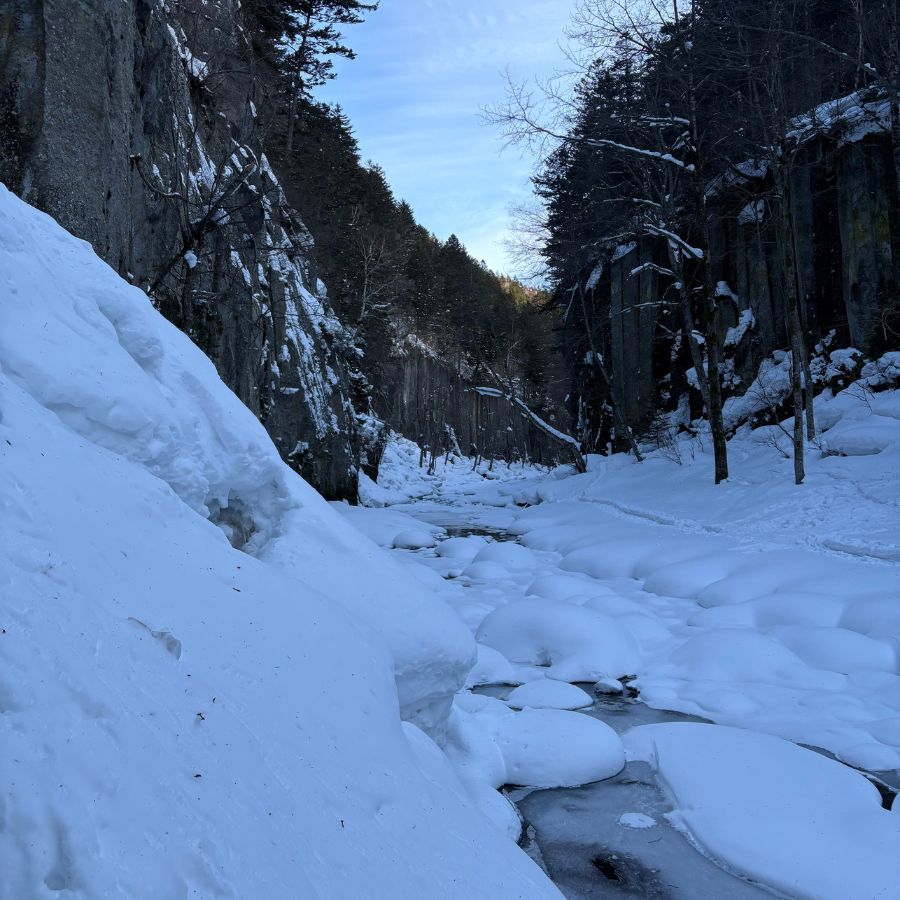
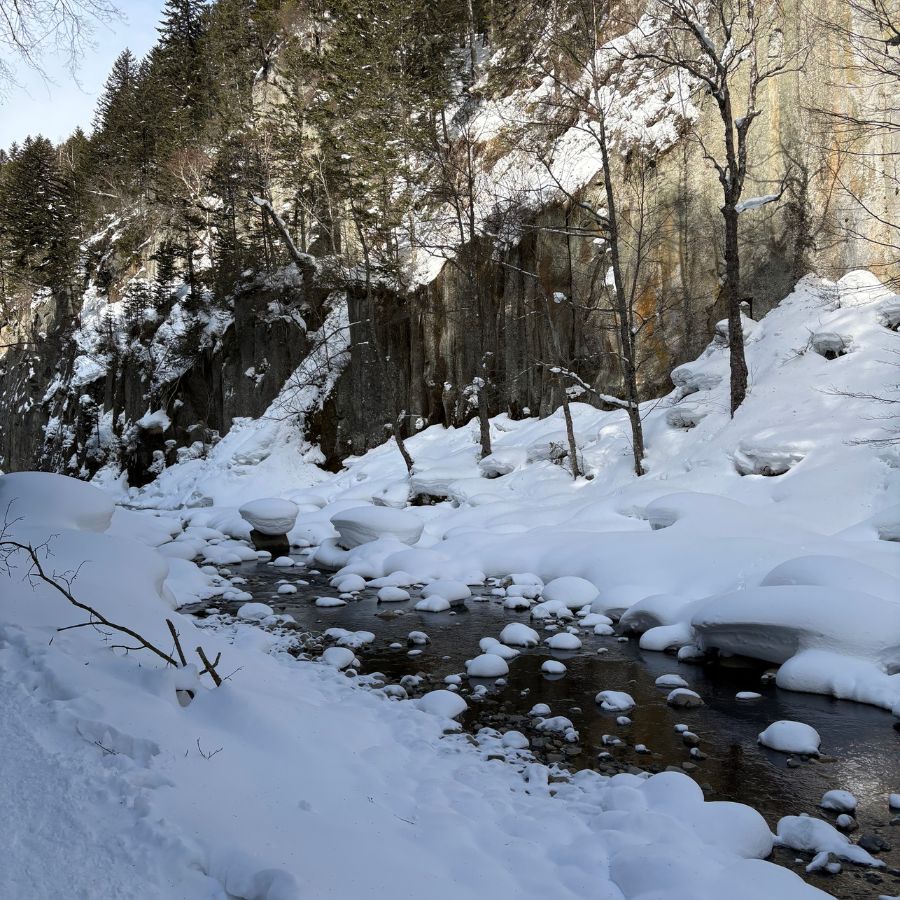
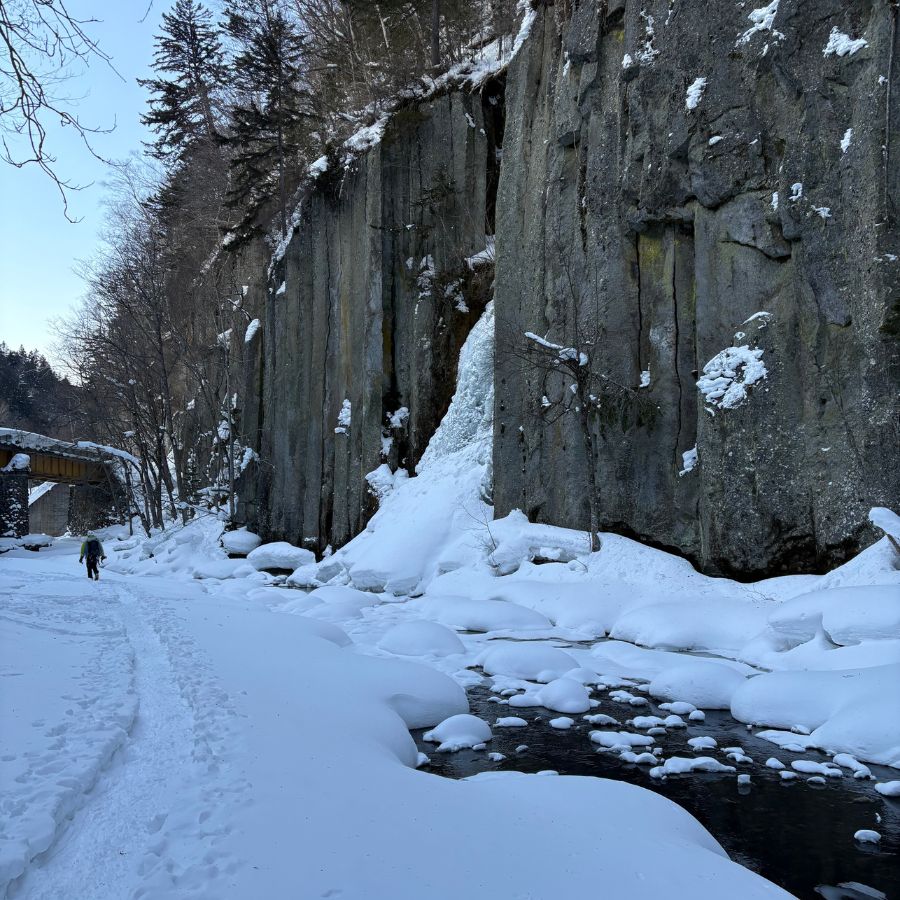
The area looks like a narrow valley with steep cliffs on both sides. In the summer there is
actually
a river running through the middle. During winter the river becomes partially frozen, creating
an
incredible landscape of snow, ice, and frozen waterfalls.
I have traveled to snowy countries before, but that was before I became interested in outdoor
activities. Visiting a place like this again now feels completely different. This time I looked
around and could not stop appreciating the landscape. It was simply beautiful.
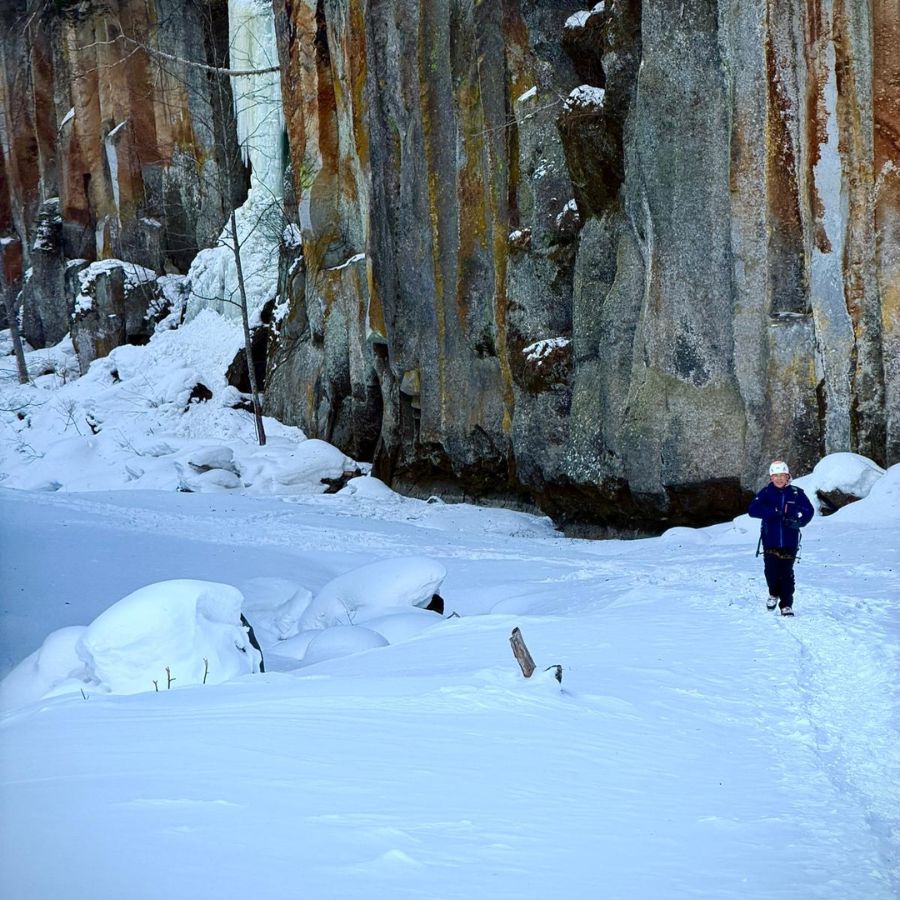
Hiking Into the Frozen Valley
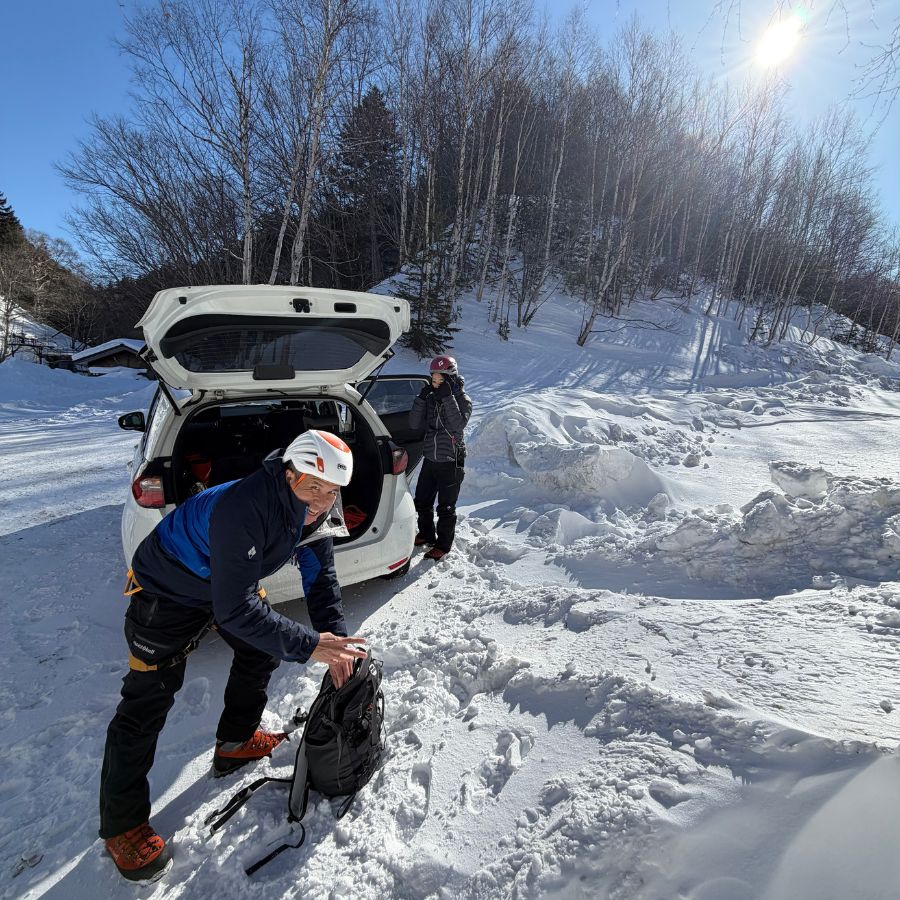
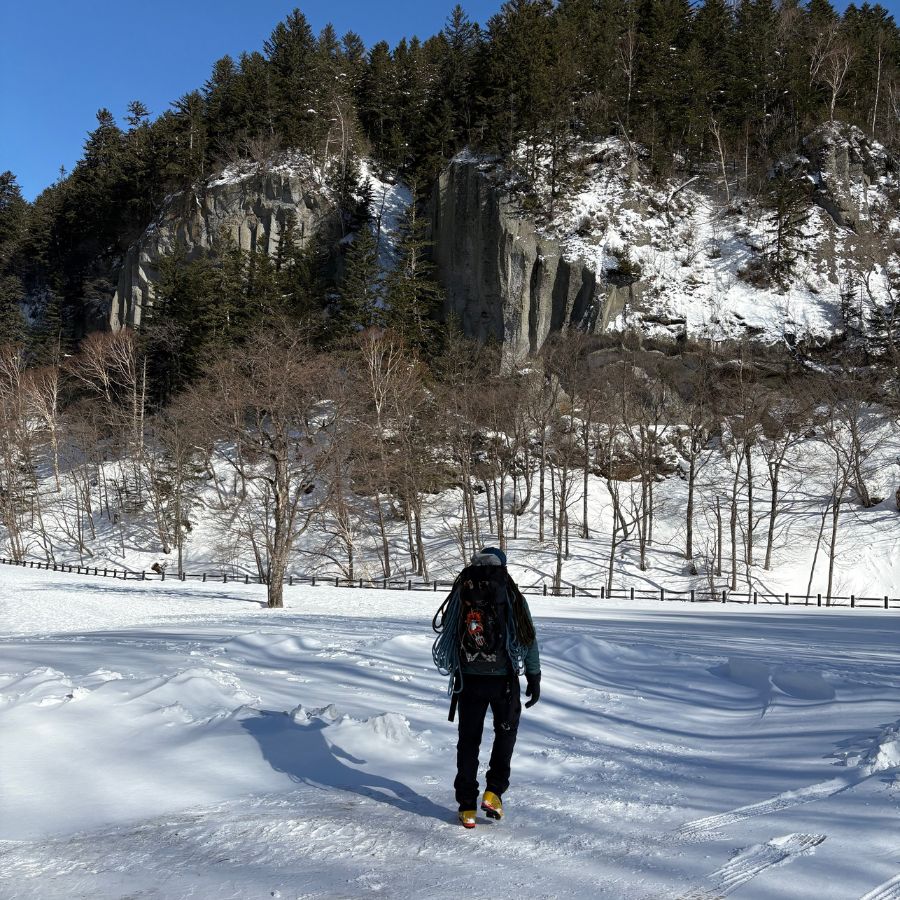
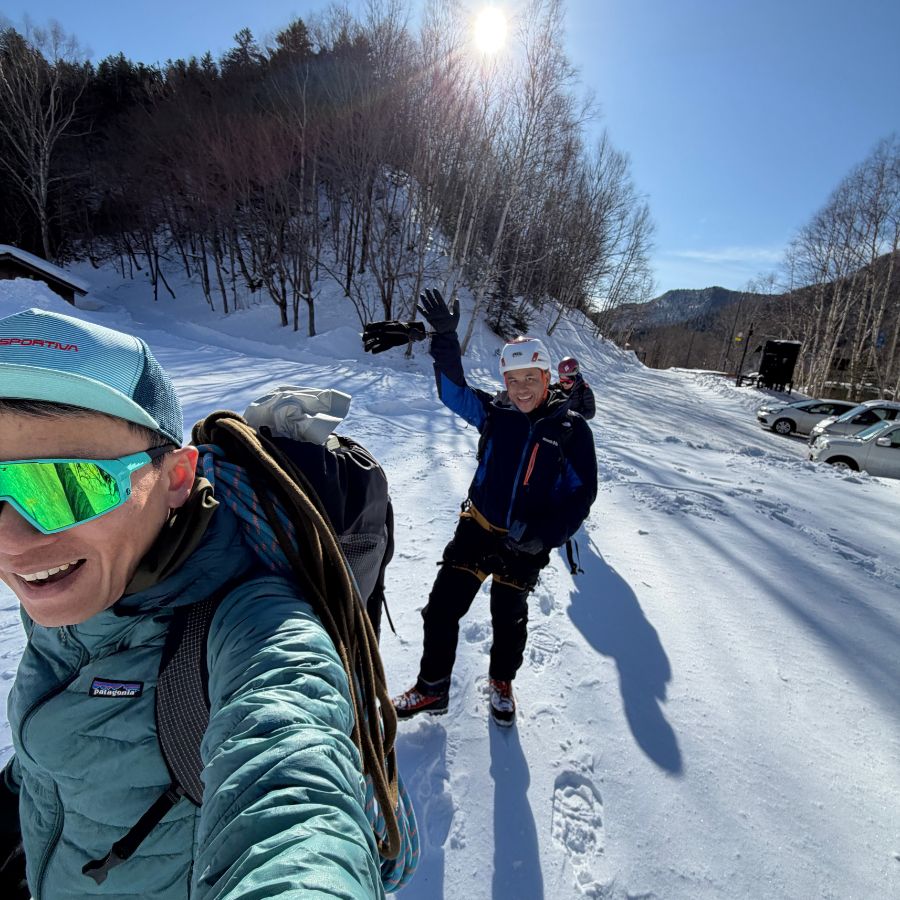
We parked the car near the entrance, which was very convenient. From there we started our first
lesson of the day which was hiking through snow while carrying climbing gear.
Before starting the hike we put on our harness and prepared our gear. One important lesson I
learned
very quickly was to always keep your gloves on.
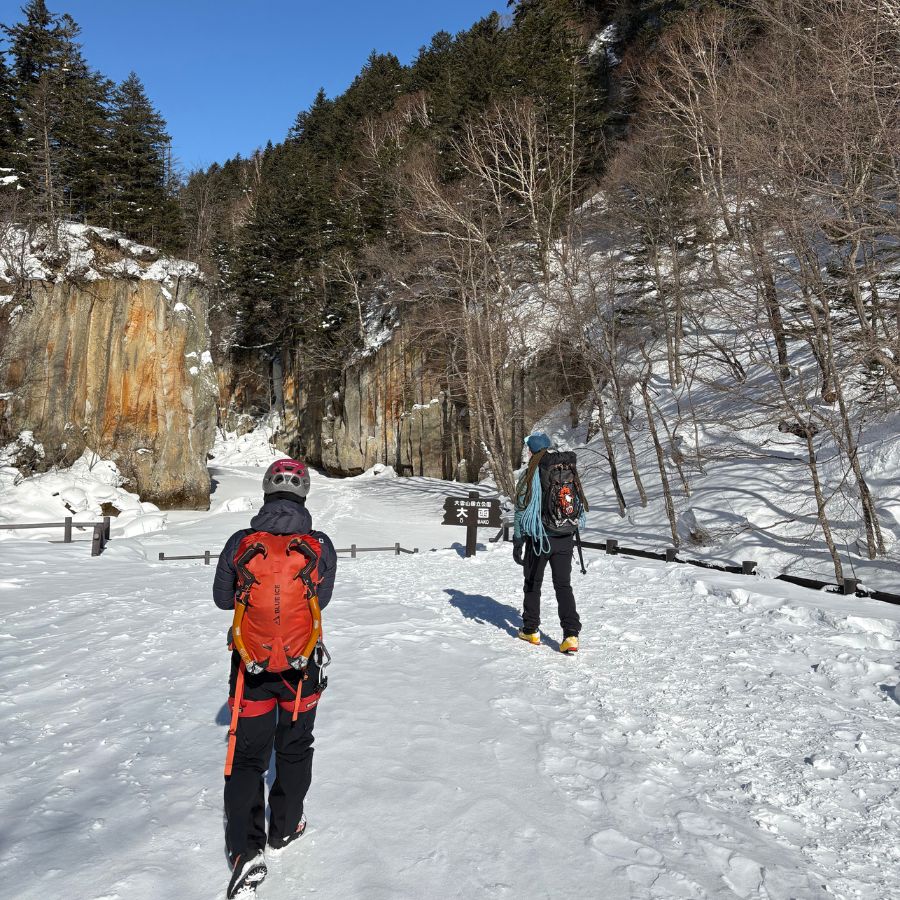
We followed the path that other climbers had already made in the snow. Having proper
mountaineering
boots was very important because they are designed to work with crampons for ice climbing.
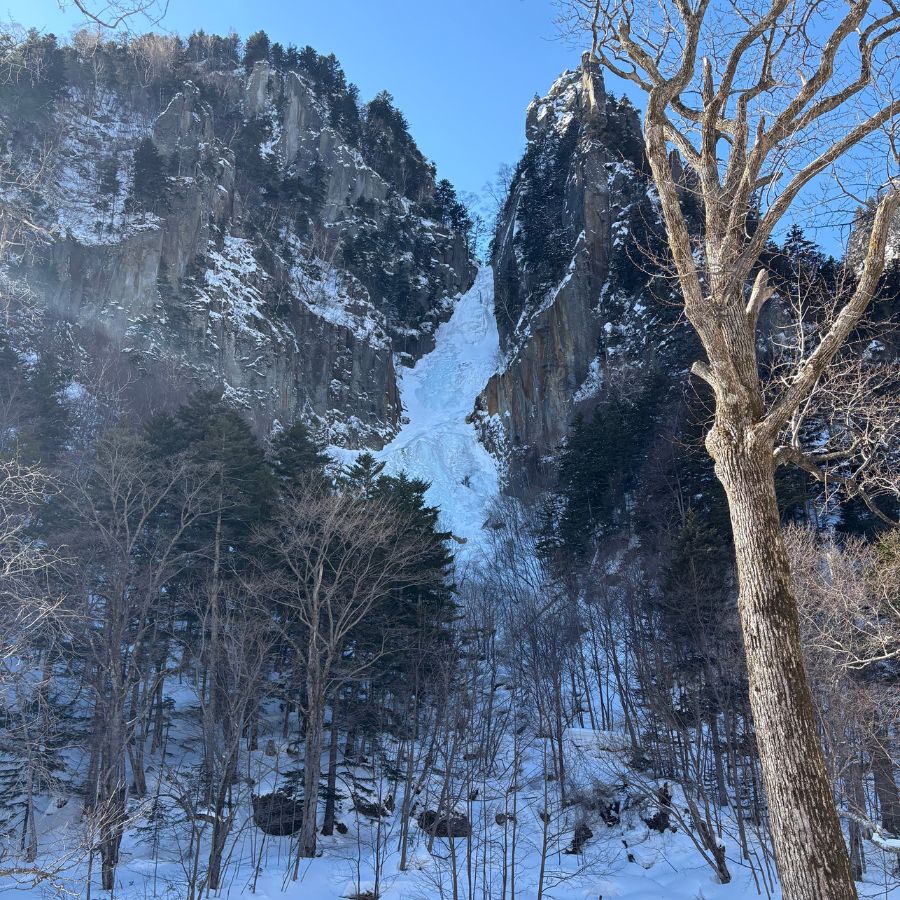
Approaching the First Frozen Waterfall
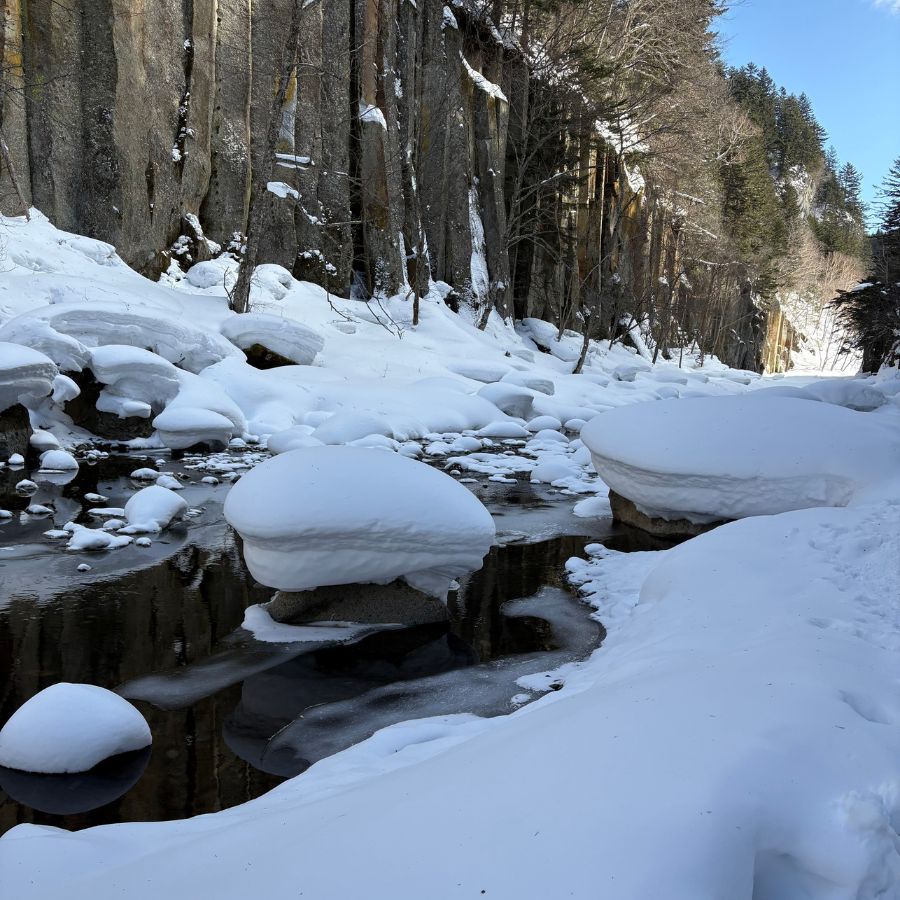
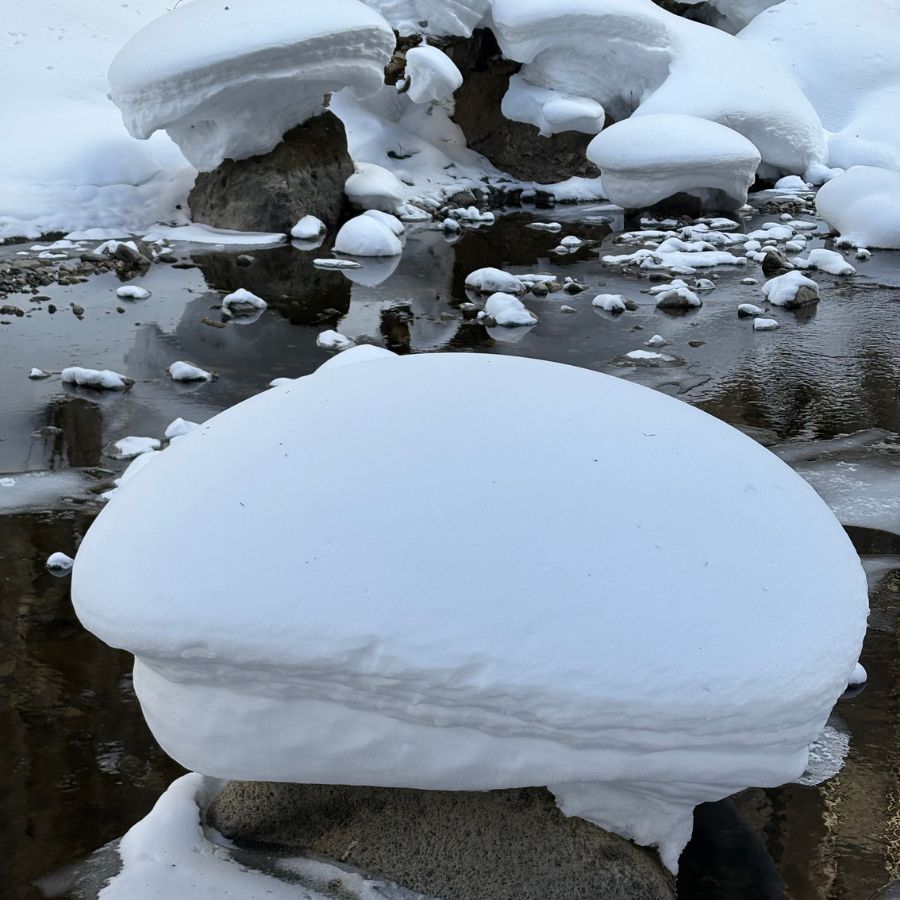
Our first climbing spot was less than ten minutes away, but the walk itself was already amazing.
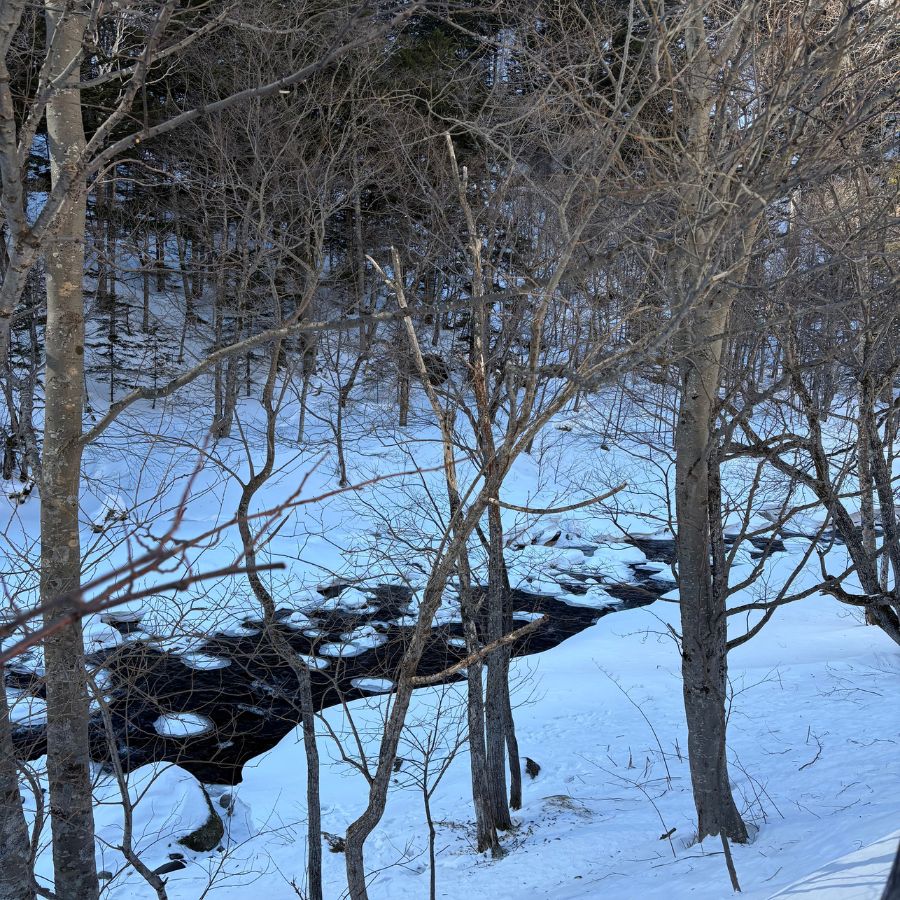
I was excited the entire time. Seeing snow sitting on top of rocks in the partially frozen
river,
forming shapes that looked like bubbles, felt almost peaceful and meditative.
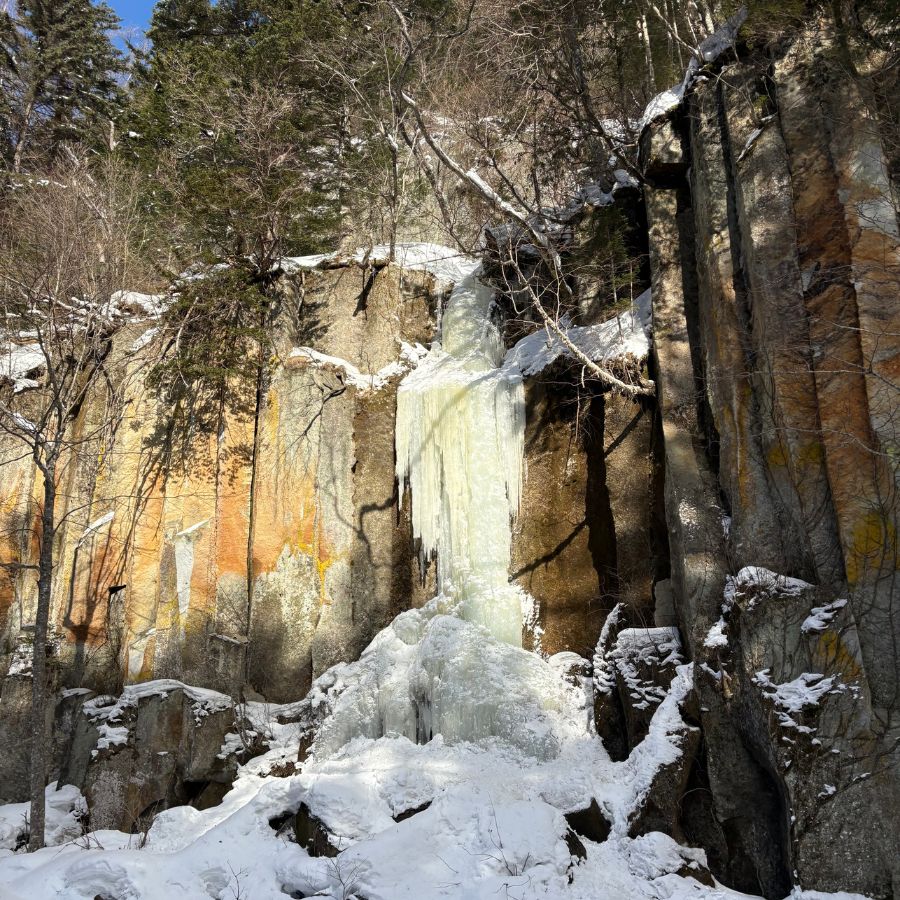
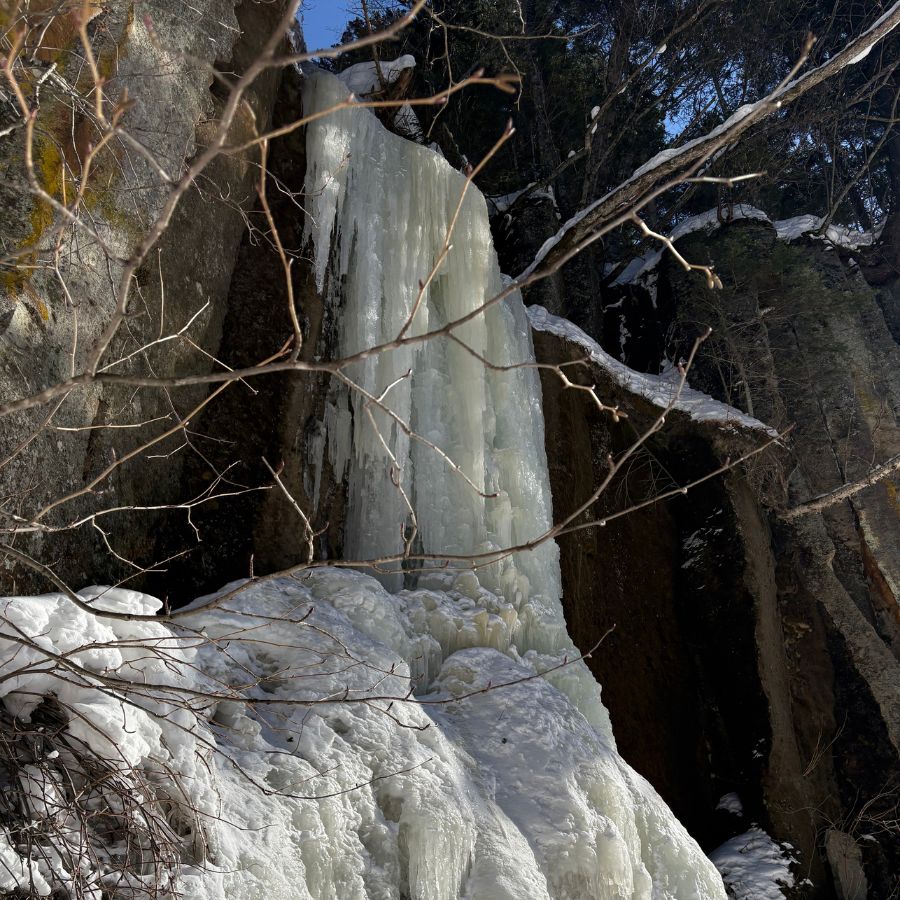
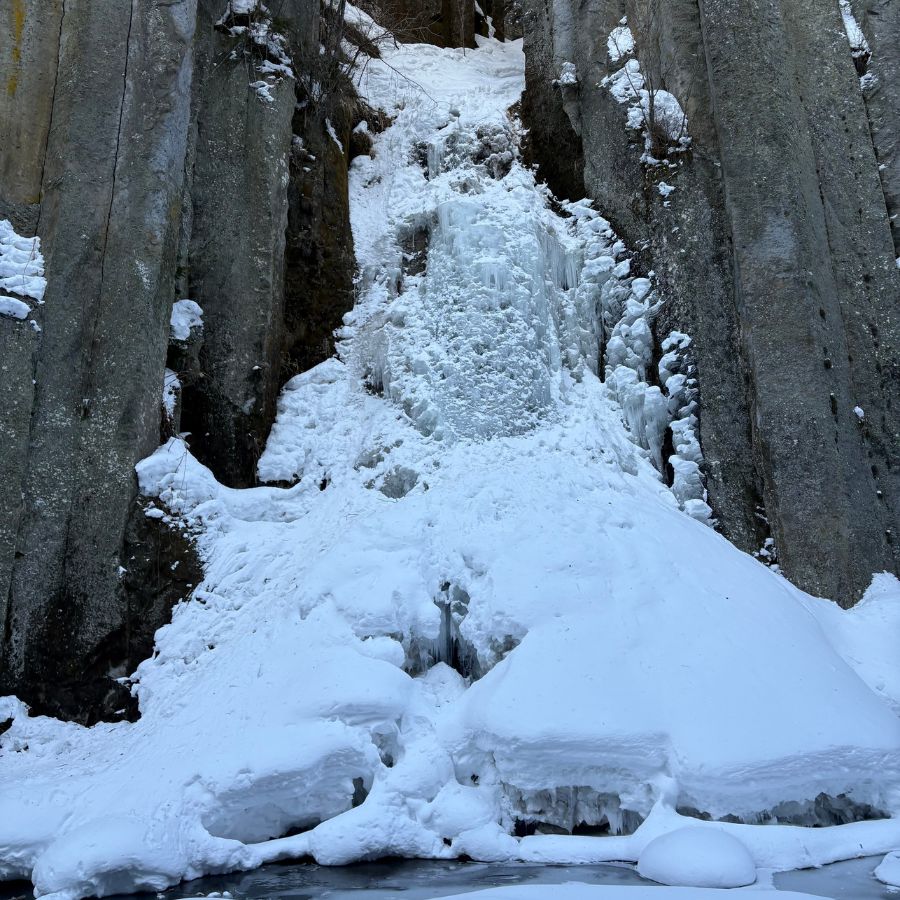
Then we saw the first frozen waterfall.
Seeing a frozen waterfall up close is a completely different experience. At first it looks
slippery
and impossible to climb because you do not yet understand how the equipment works.
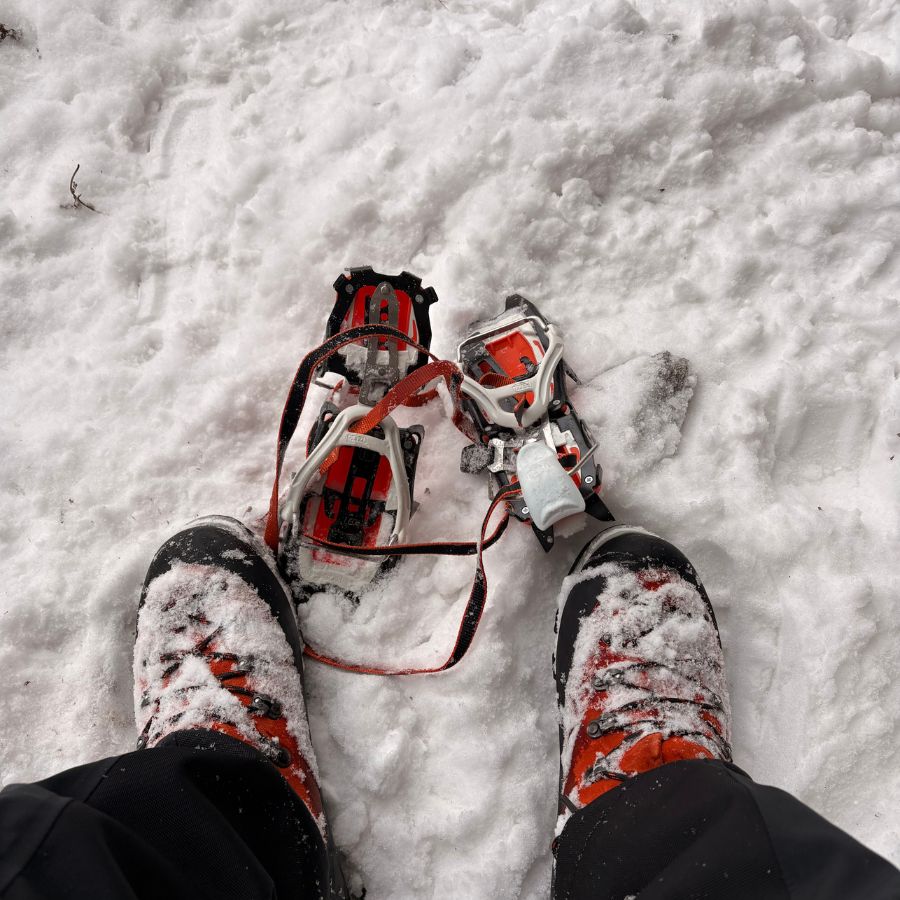
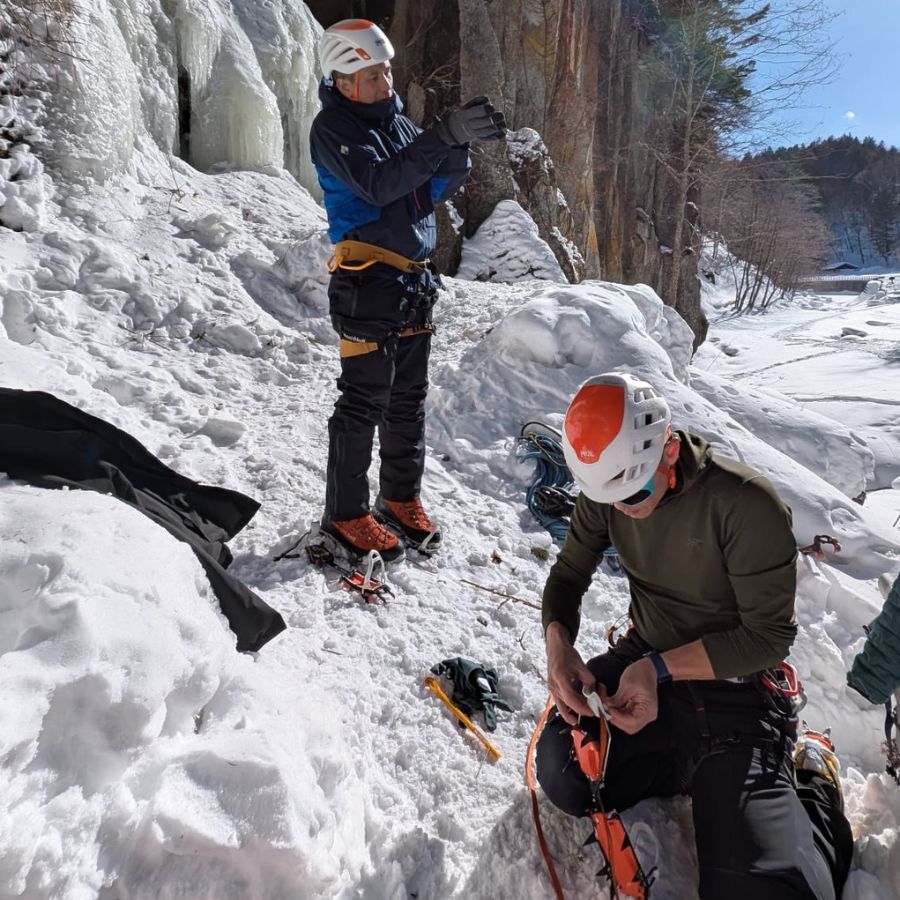
QX first showed us how to put on the crampons. Surprisingly, this was more difficult than it
looked,
especially when wearing gloves. At one point I removed my gloves to adjust the crampons, which
caused my hands and gloves to get wet. That made the rest of the morning slightly uncomfortable
because wet gloves in freezing temperatures are not pleasant.
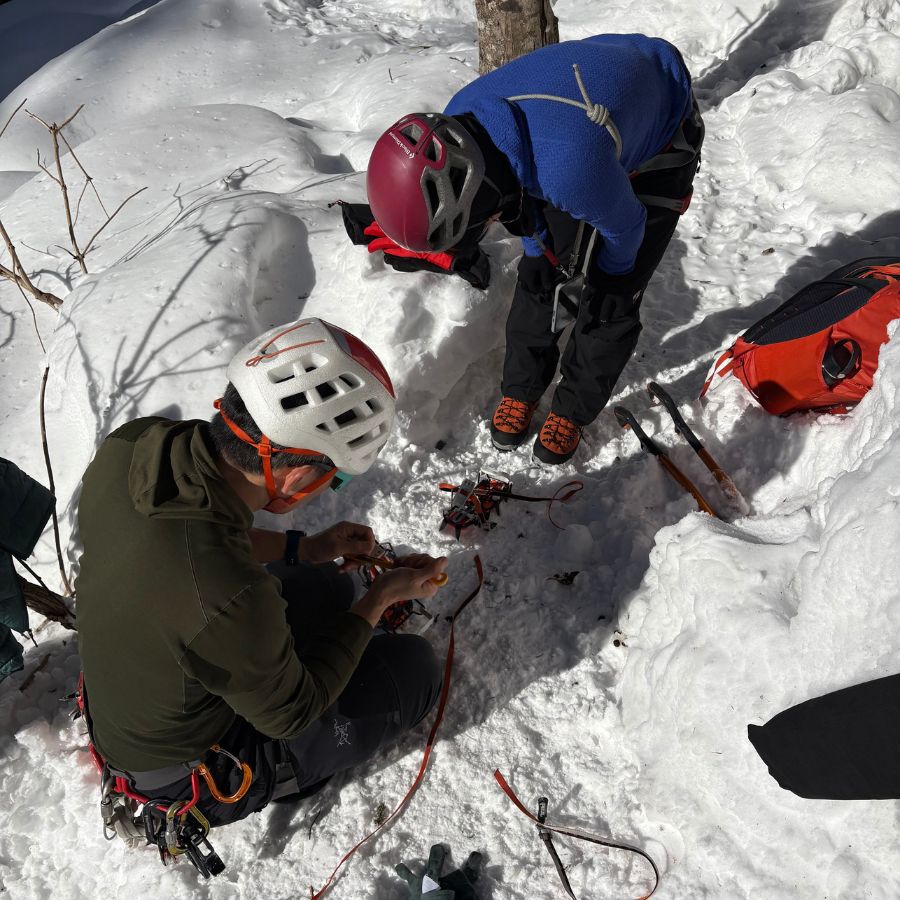
Learning How to Use Crampons and Ice Axes
After securing the crampons to our mountaineering boots, QX gave us a quick introduction to
using
ice axes.
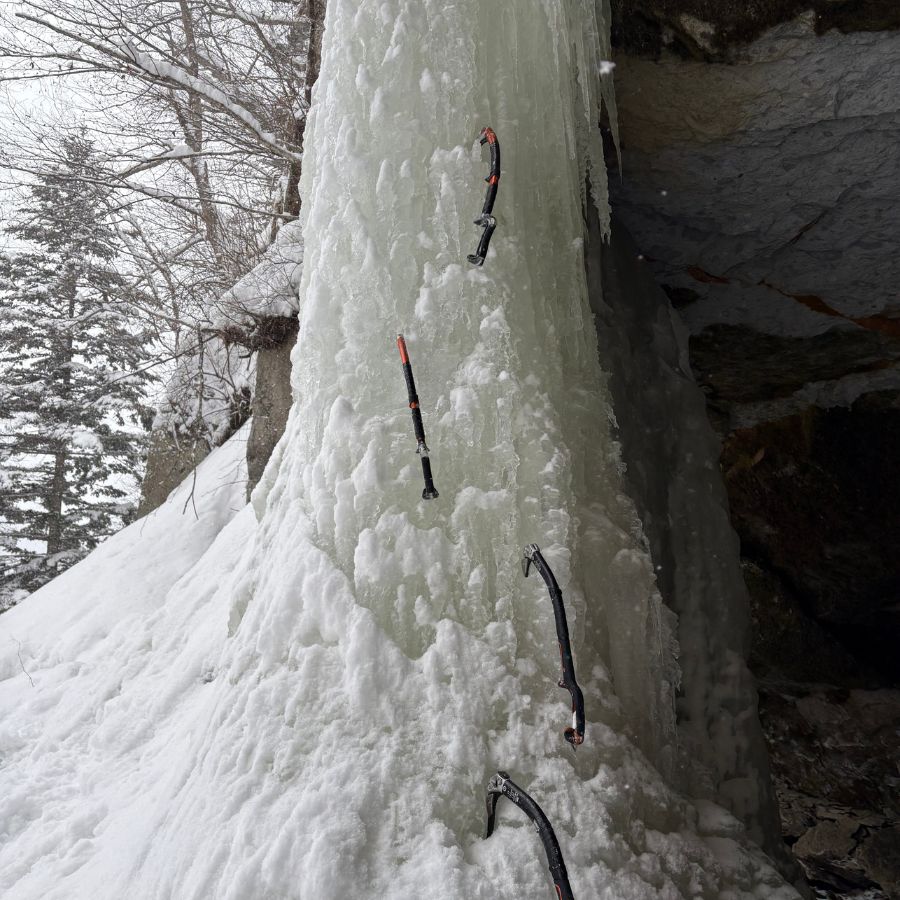
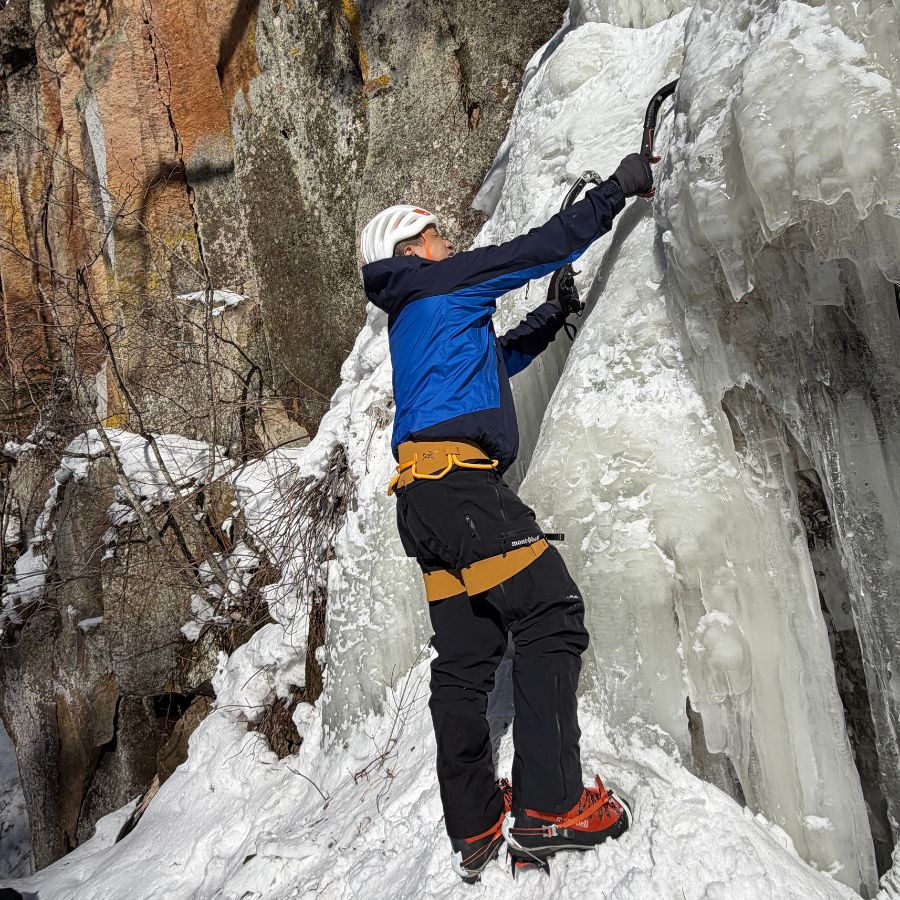
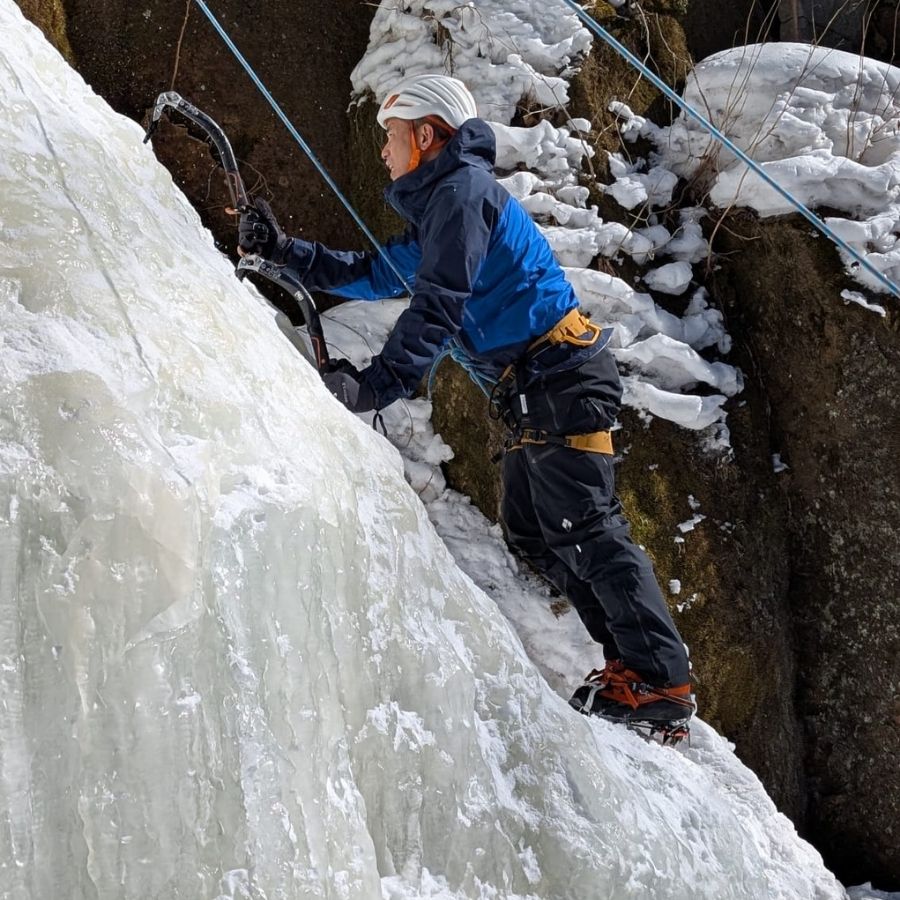
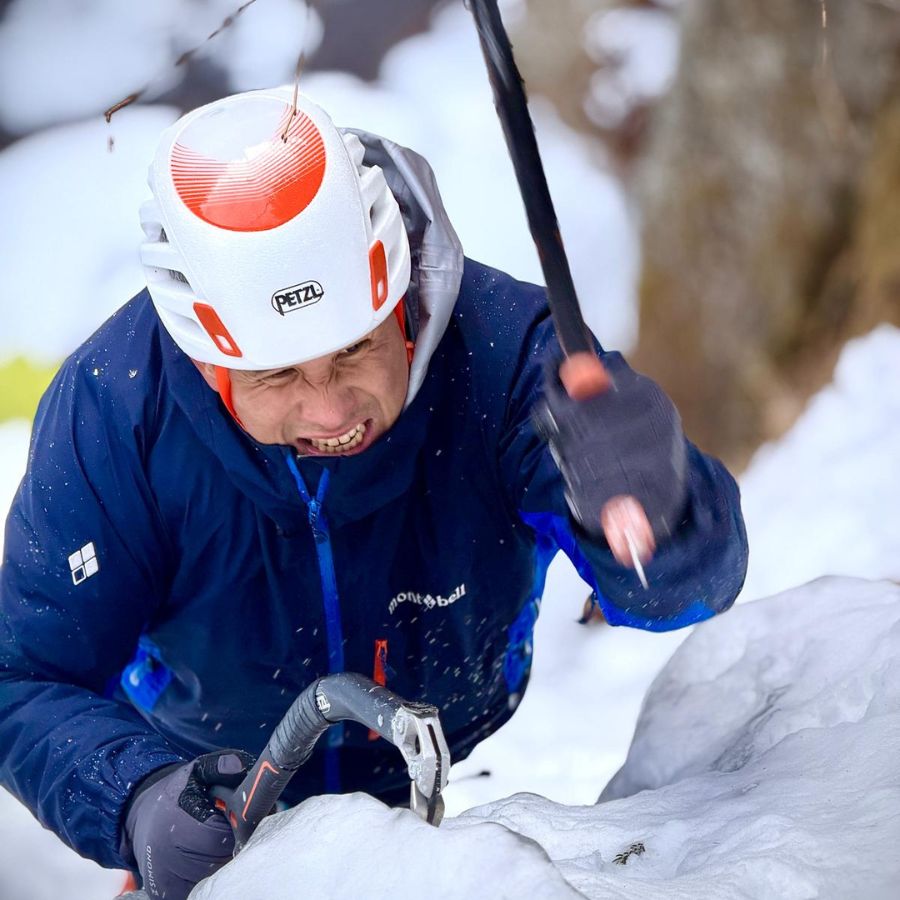
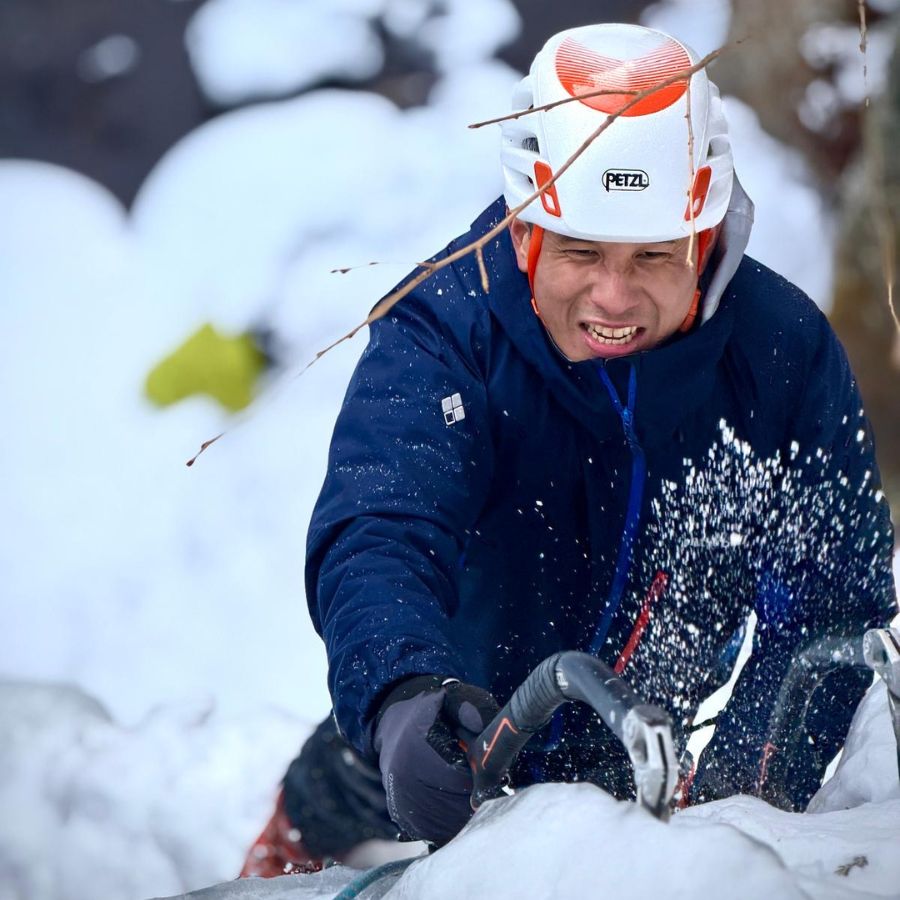
Ice climbing is very different from rock climbing. Instead of relying mostly on your hands, you
depend heavily on your tools and your foot placements. Learning how to swing the ice axes
correctly
and place your crampons into the ice requires technique and precision, and understanding some
ice climbing basics
can really help.
Walking on snow is already challenging, but walking on ice with crampons feels completely
different.
Much of the morning was spent simply learning how to move on the ice and how to kick the
crampons
into the surface to create stable steps.
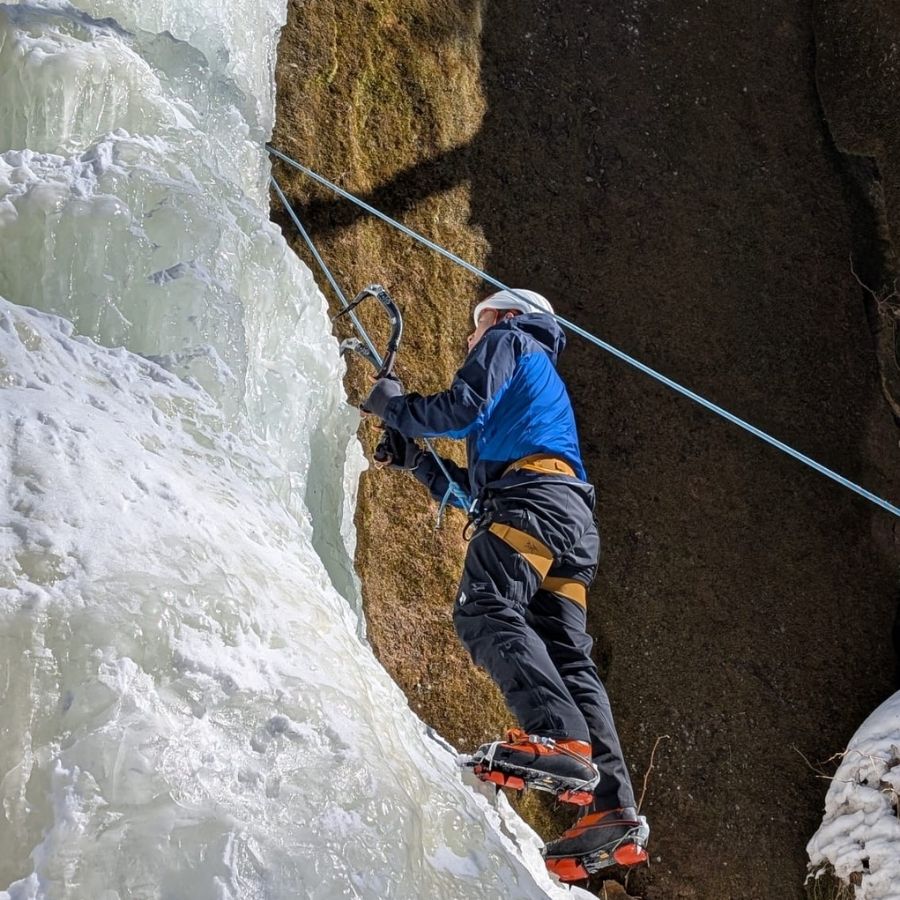
At first it feels very unnatural. Even though the metal points of the crampons are inside the
ice,
it still feels slippery and unstable. Because of that I relied a lot on my upper body, which
also
requires learning the correct technique when swinging the ice axes.
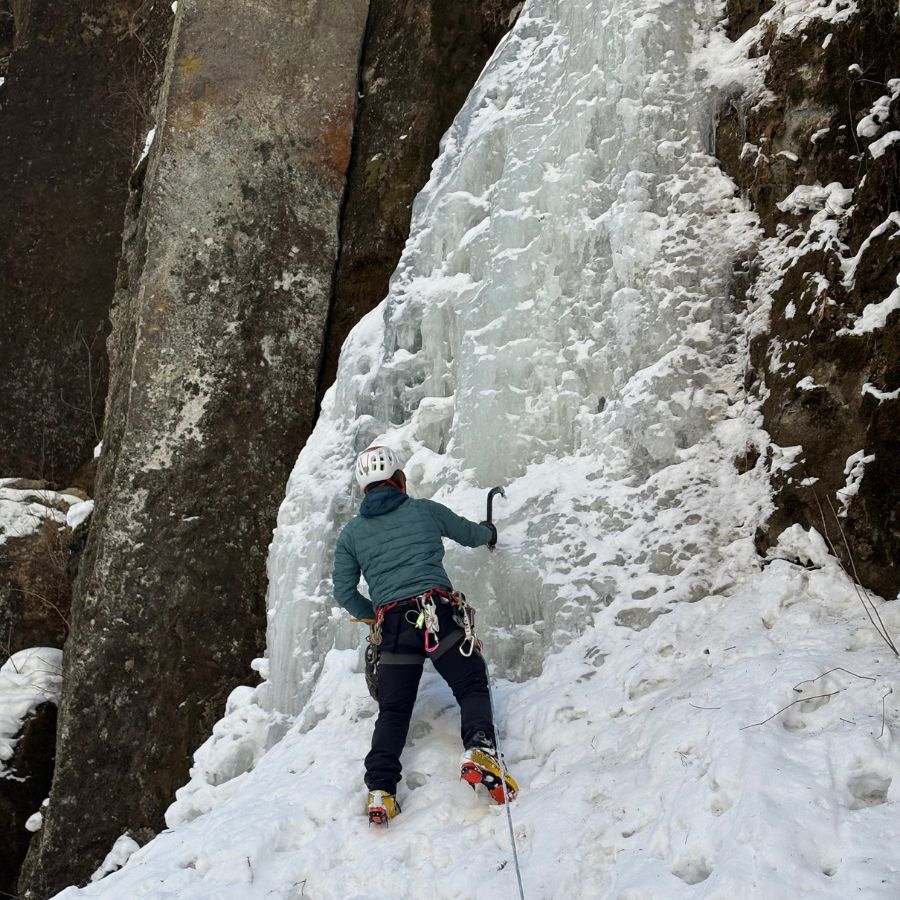
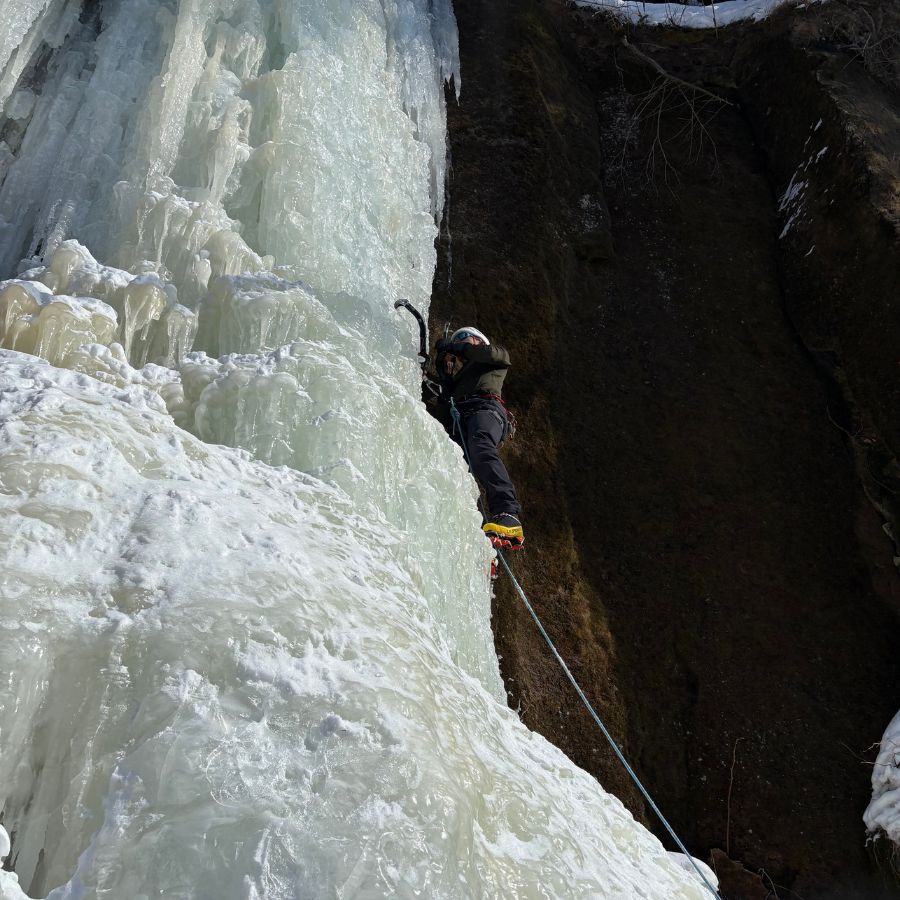
First Real Ice Climbing Practice
Ice climbing is not as straightforward as it might look. Having an experienced guide like QX was
extremely important.
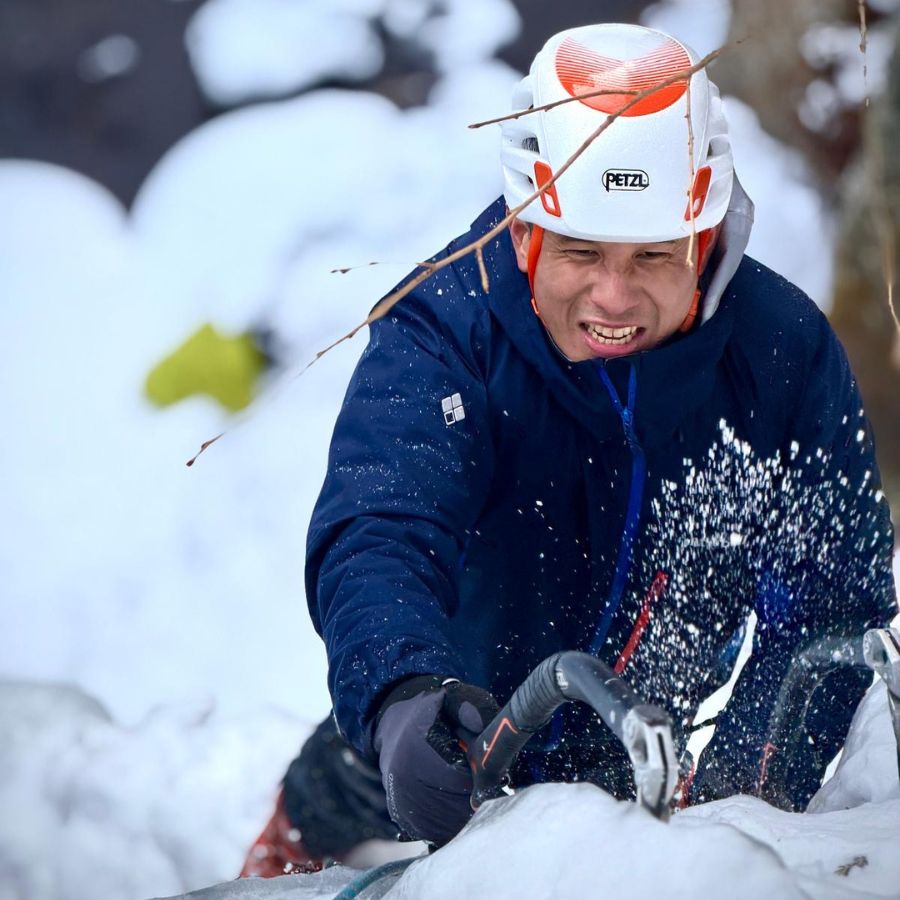
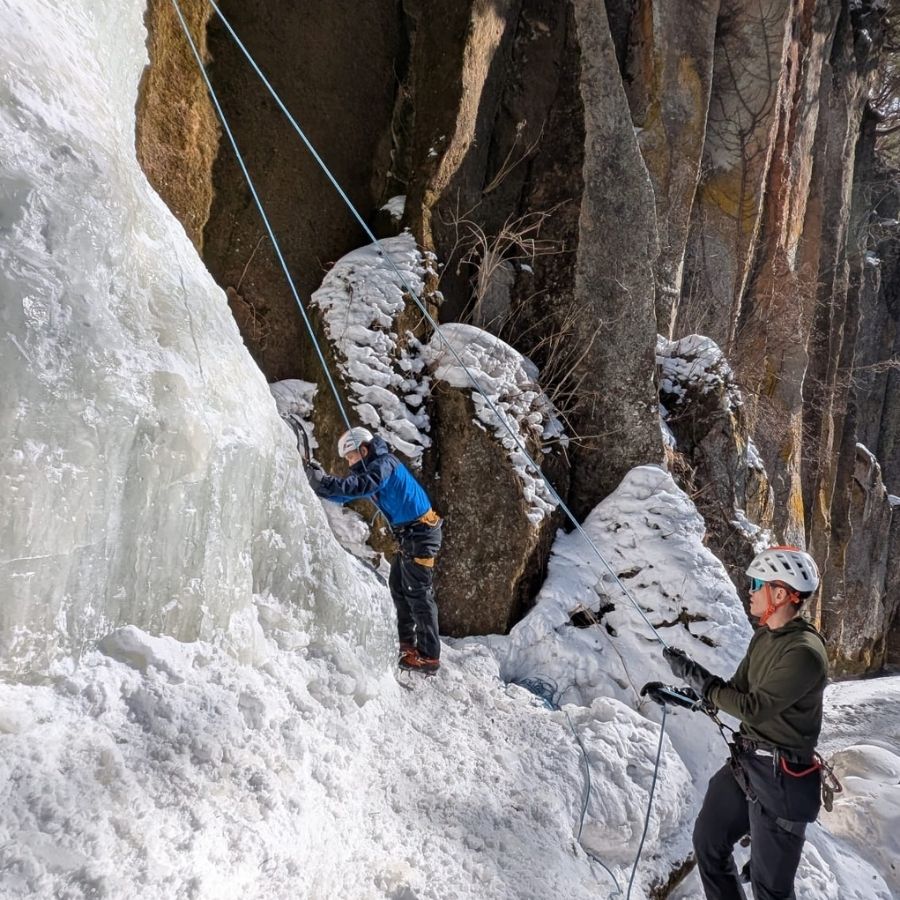
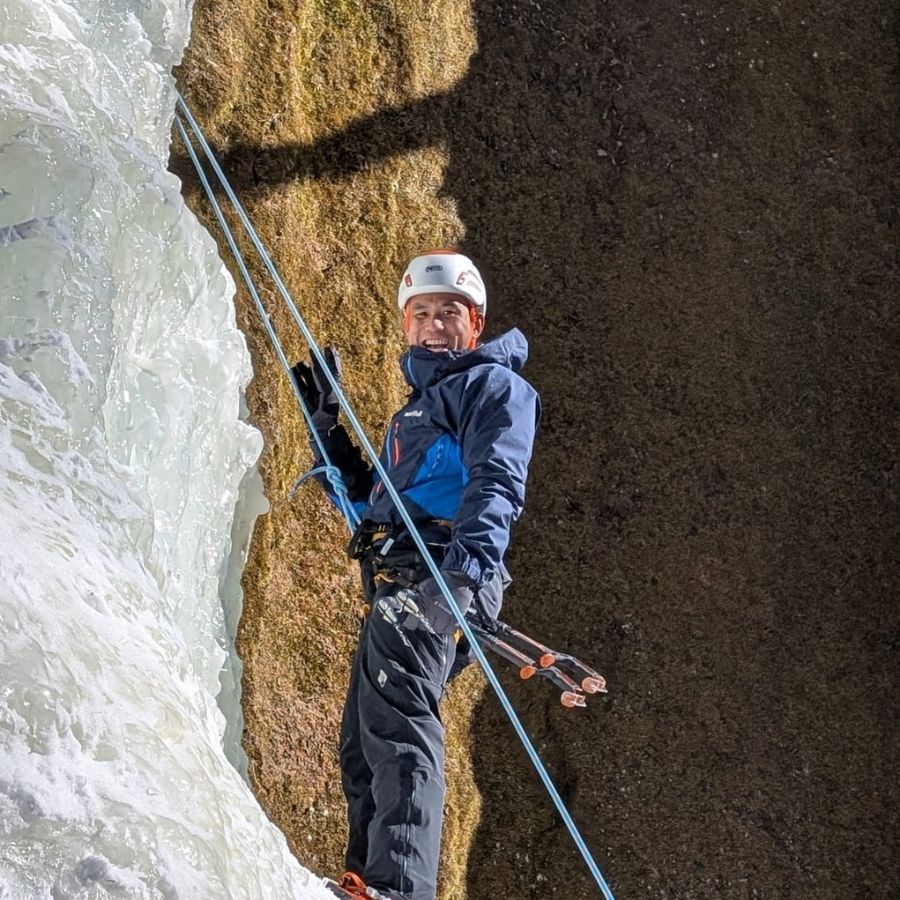
When you swing the ice axes into the ice, large chunks can break off and fall. Because of that
the
belayer has to stand further away from the base of the waterfall. This is something I noticed
immediately. Several times when I hit the ice, large pieces broke off and fell down, sometimes
even
hitting my helmet and face.
For that reason, wearing sunglasses or protective glasses is highly recommended.
My First Proper Frozen Waterfall Climb
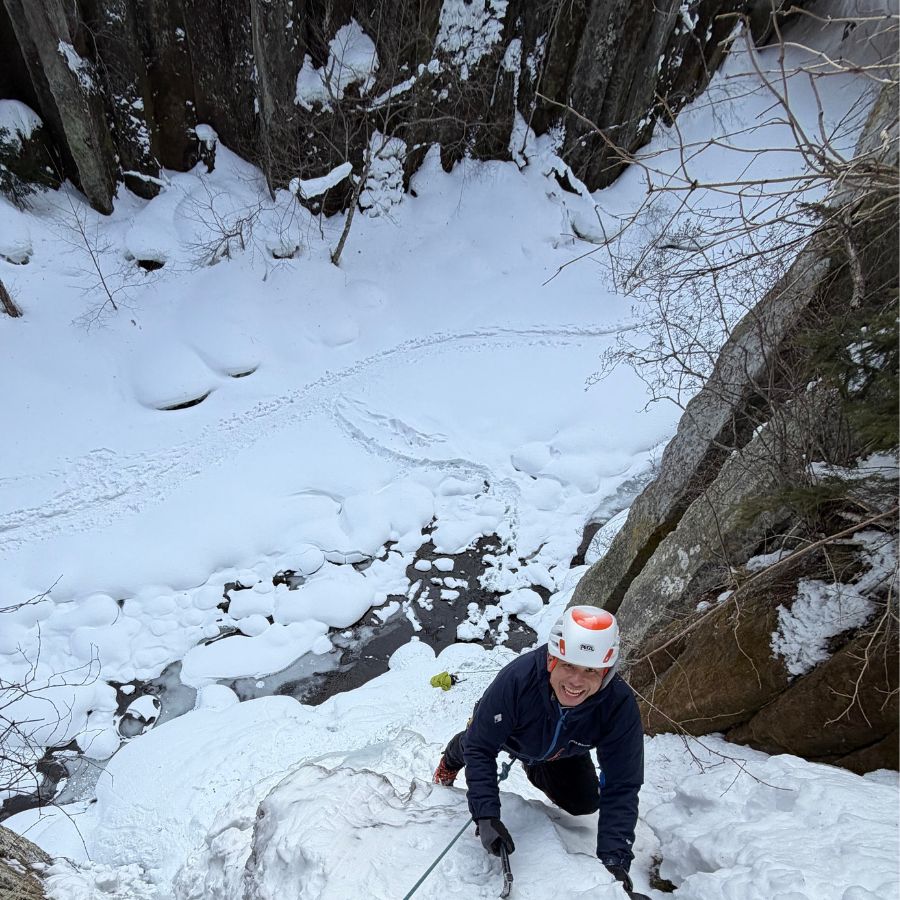
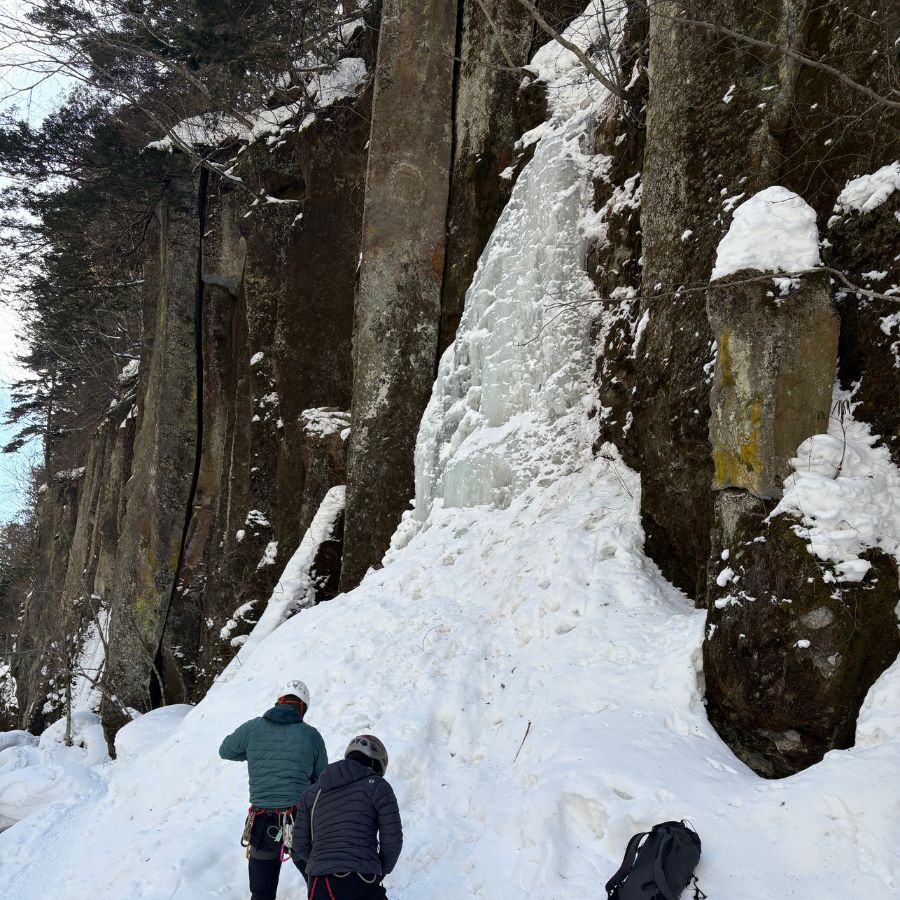
After the morning training we walked deeper into the snow covered valley to reach the next
waterfall.
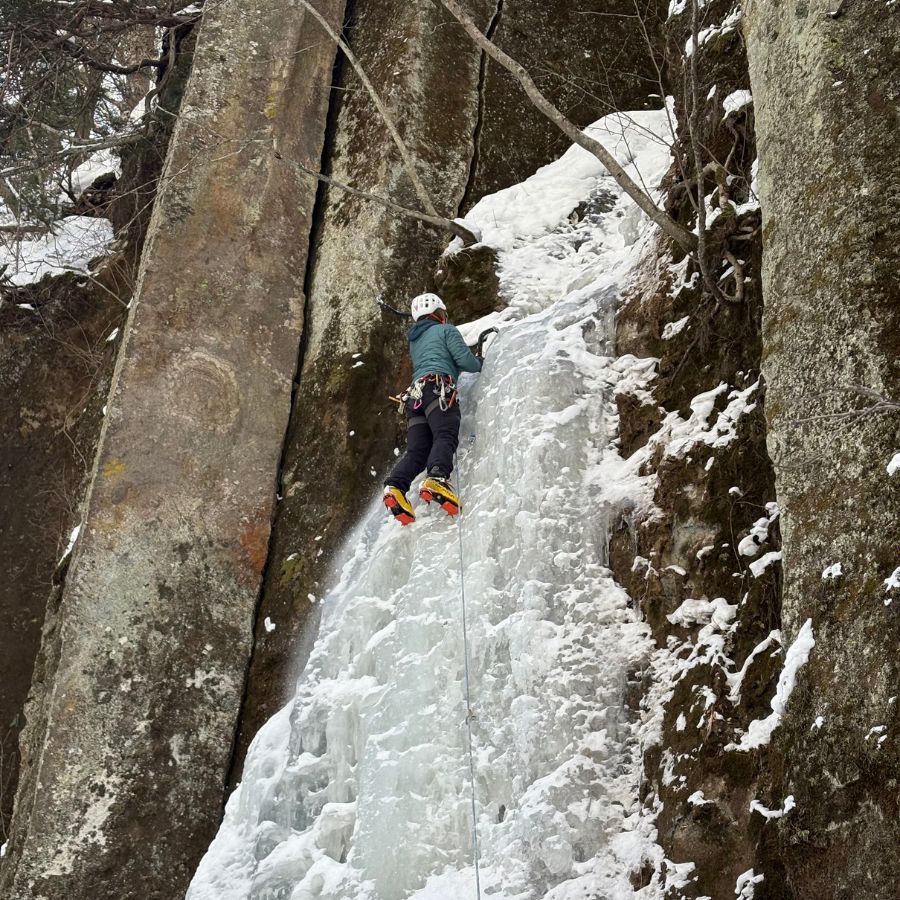
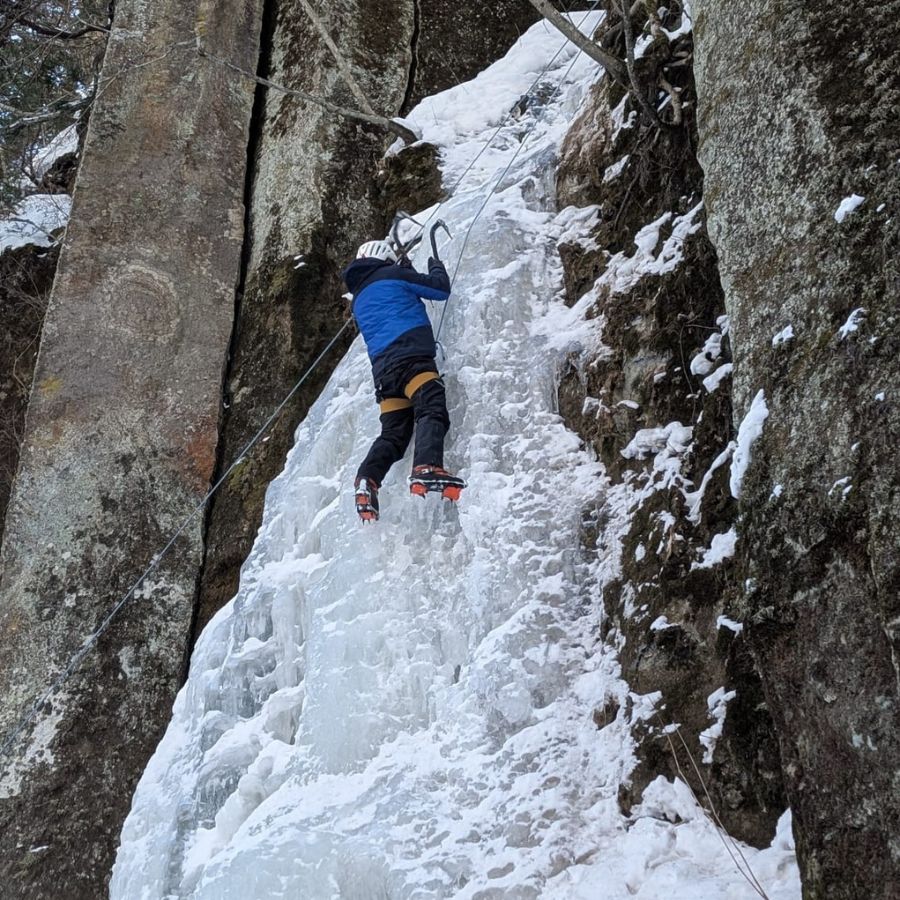
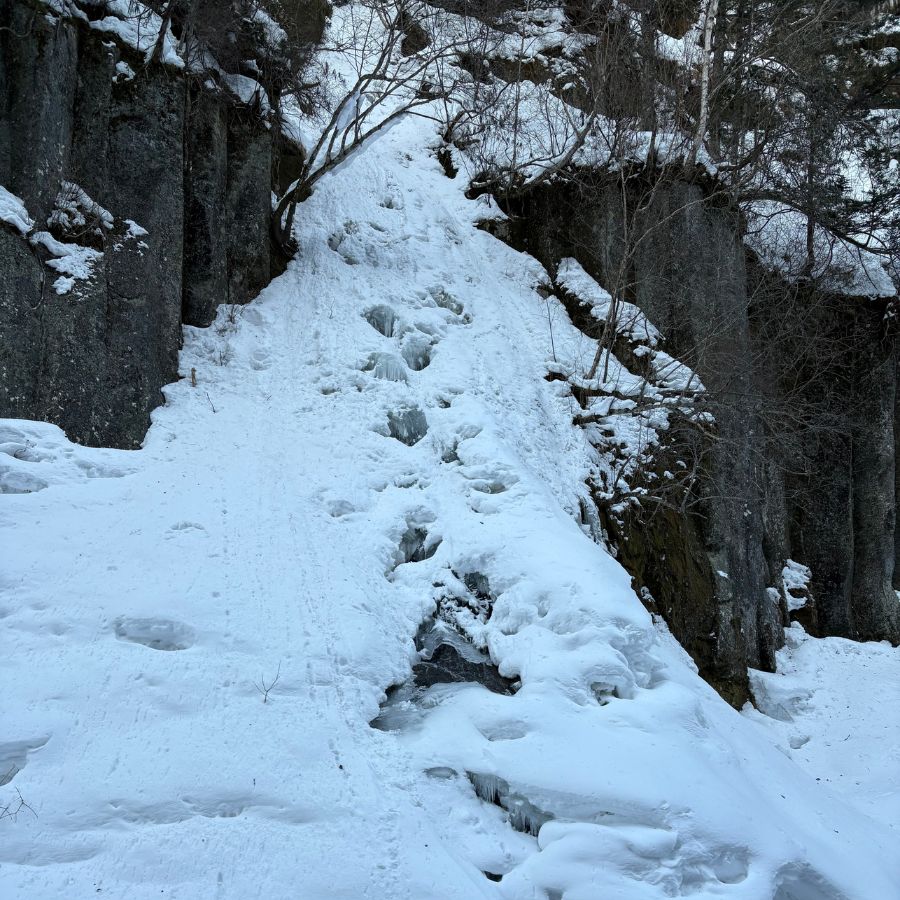
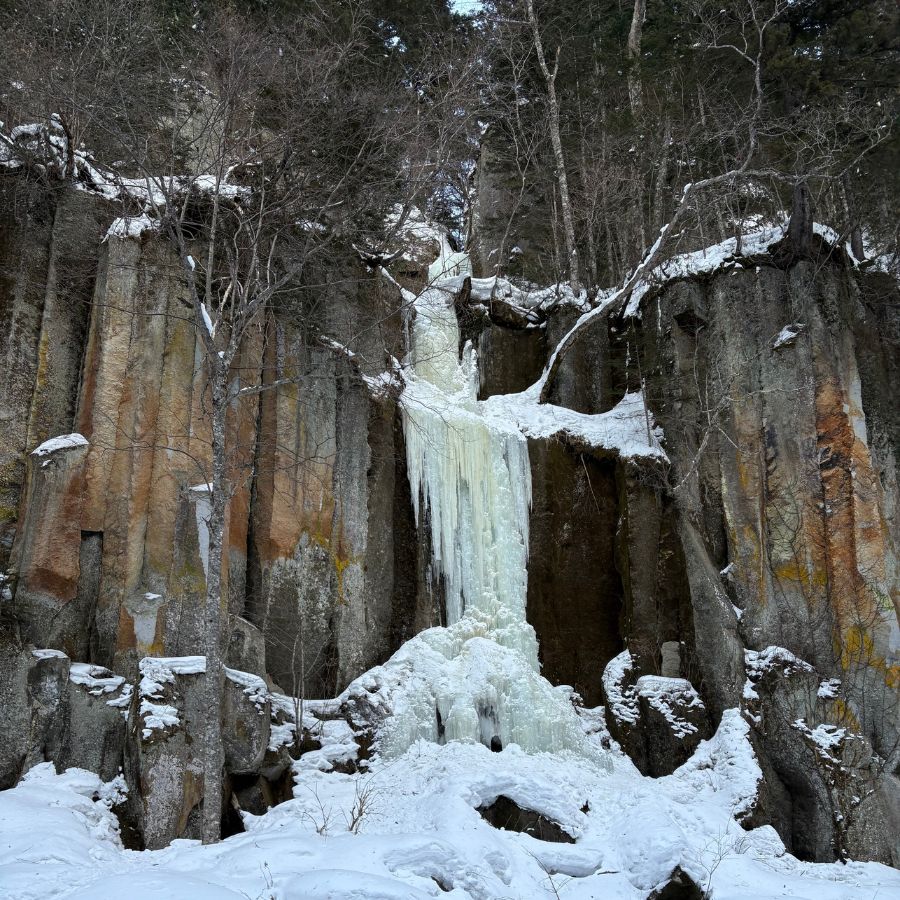
The walk itself was cold but incredibly peaceful. Soon we arrived at a frozen waterfall about 15
meters high. This was where we practiced our first proper ice climb using the techniques we had
just
learned.
Surprisingly, I did better than I expected. At the same time I quickly realized what I needed to
improve, especially my footwork and how I used my upper body.
Ice climbing was fun, but learning the correct techniques and using the equipment efficiently
would
make the experience even more enjoyable.
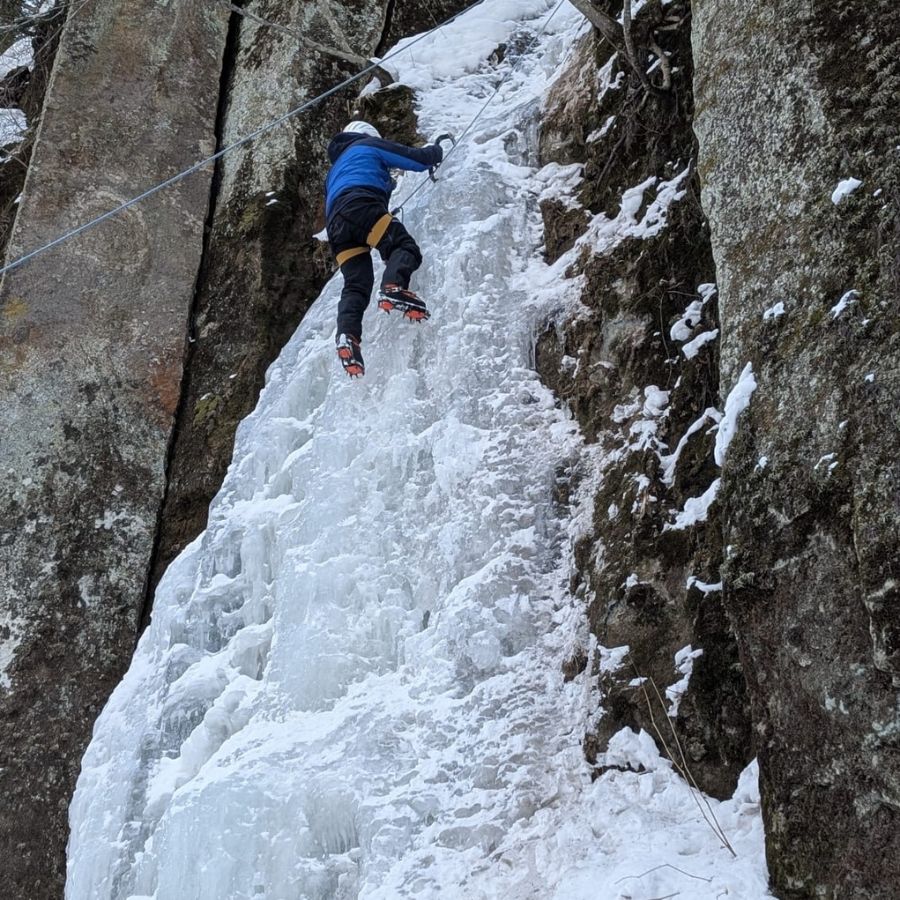
The Largest Waterfall of the Day
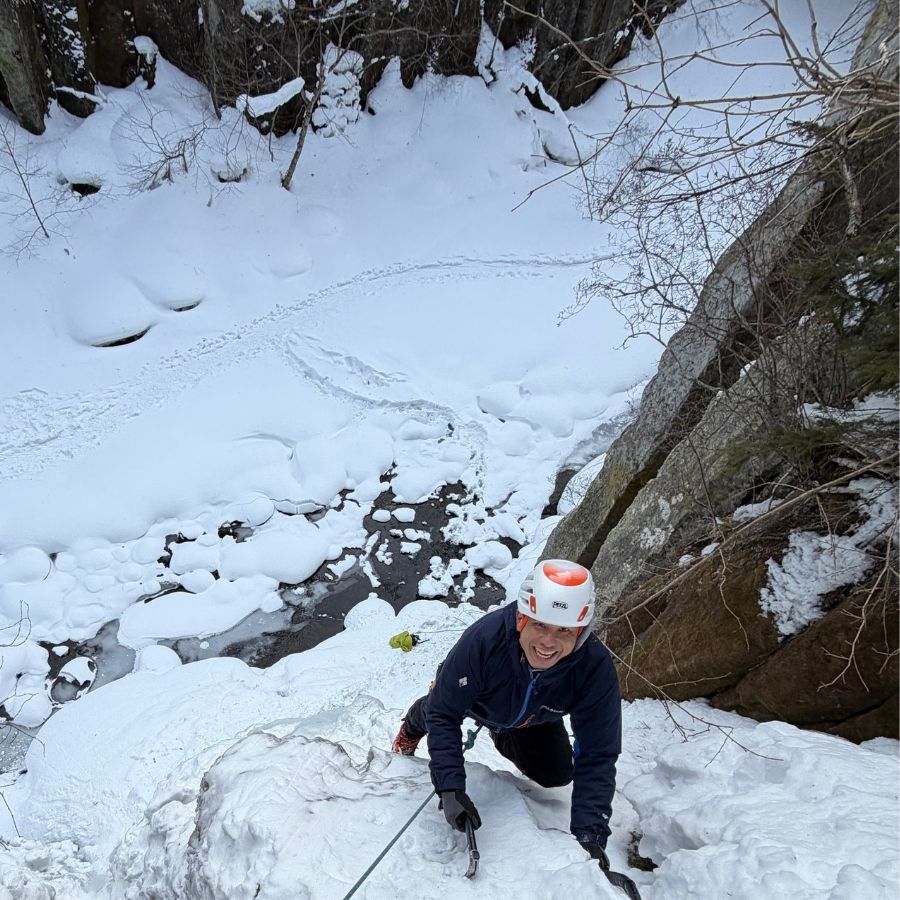
The third waterfall we climbed was my favorite of the entire trip.
It was much larger than the others and required us to cross a partially frozen river to reach
the
base. QX set up the rope from the top and belayed us as we climbed.
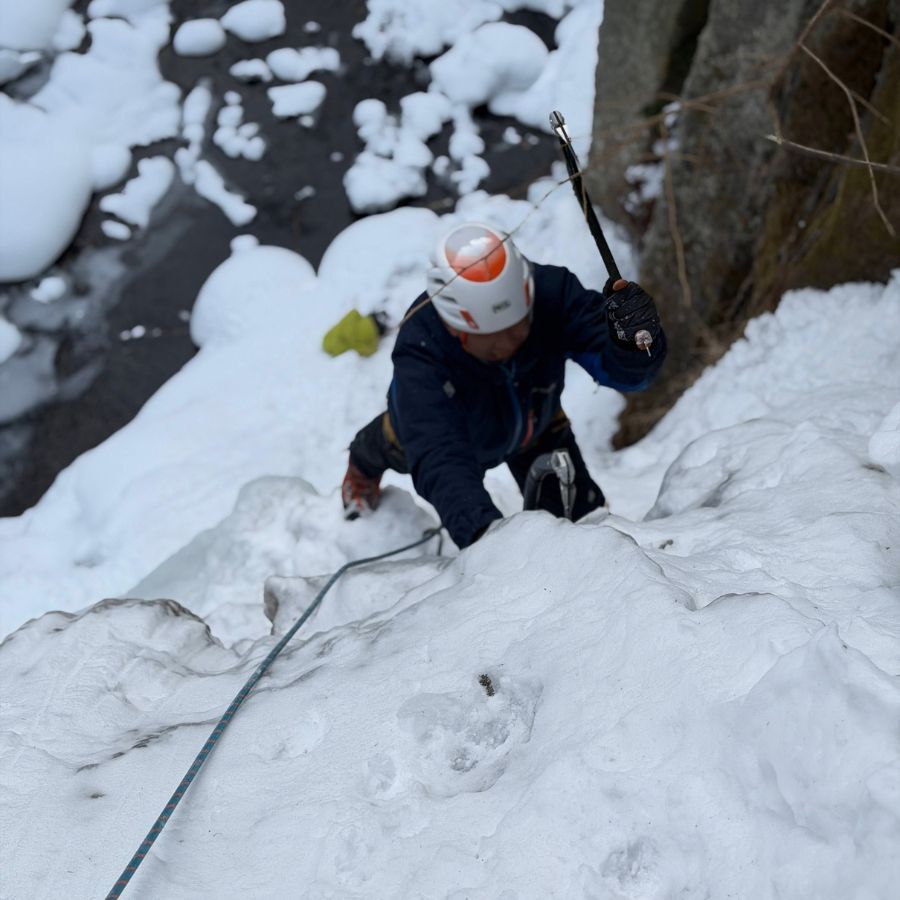
By this point I still was not fully comfortable using the crampons and ice axes together. When
you
swing the axe deep into the ice it can sometimes get stuck, and pulling it out requires balance
while standing on the crampons.
If your crampons lose grip while you are trying to remove the axe, it can feel quite nerve
wracking.
Near the top of the climb I could even hear water still flowing inside the frozen ice. That
sound
made me slightly nervous, but reaching the top and looking out at the winter landscape was an
incredible moment that is difficult to describe.
Day 2 Ice Climbing in Changing Weather Conditions
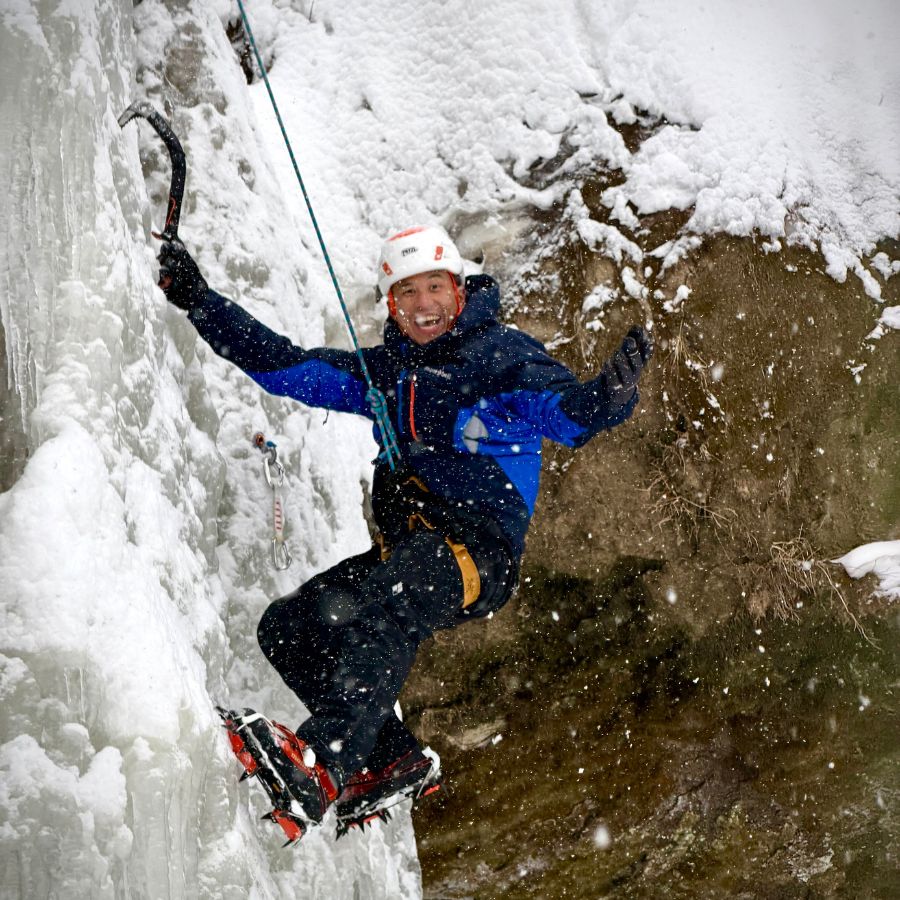
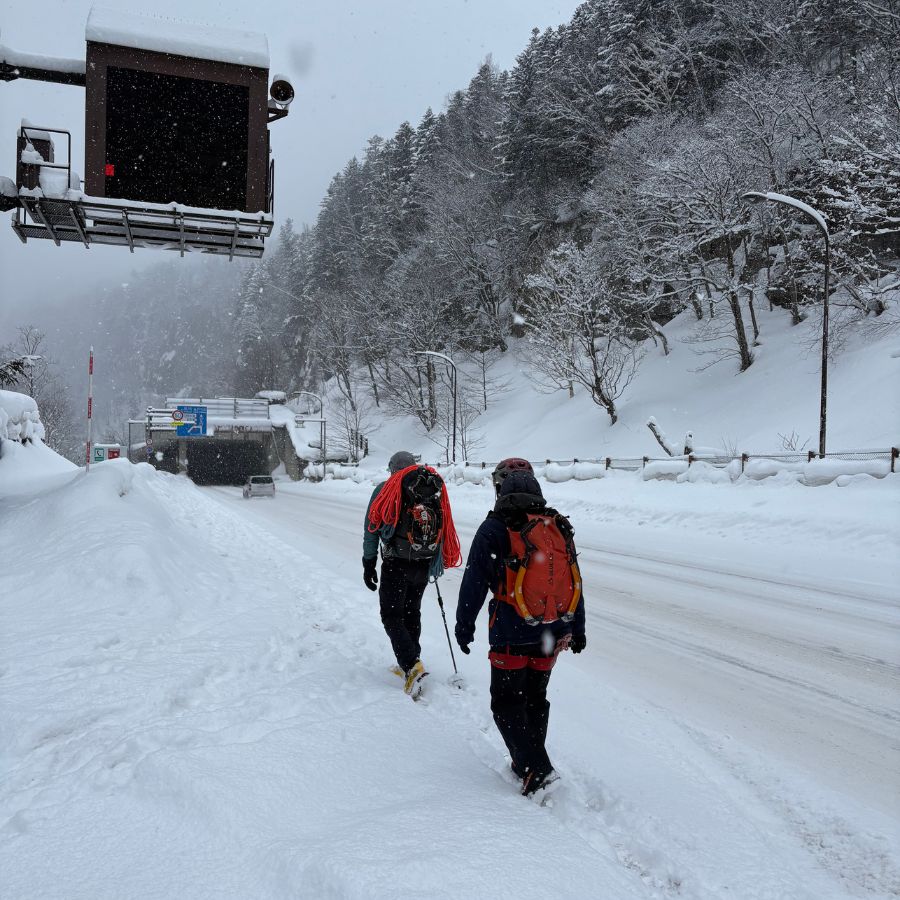
On Day 2, we started early again, but the weather conditions were very different from the day
before. It had been snowing nonstop since the night before, and the strong wind made it feel
much
colder.
Because of this, we had to carefully evaluate the conditions and adjust our plan. QX originally
had
a different climbing route in mind, but safety always comes first. We needed to consider factors
such as weather, visibility, and potential avalanche risk, which was something completely new
for
me.
This experience made me realize how important it is to climb with someone experienced,
especially
for beginners in ice climbing. Conditions in winter mountains can change quickly, and having a
knowledgeable guide makes a big difference.
Adjusting Plans and Focusing on Technique
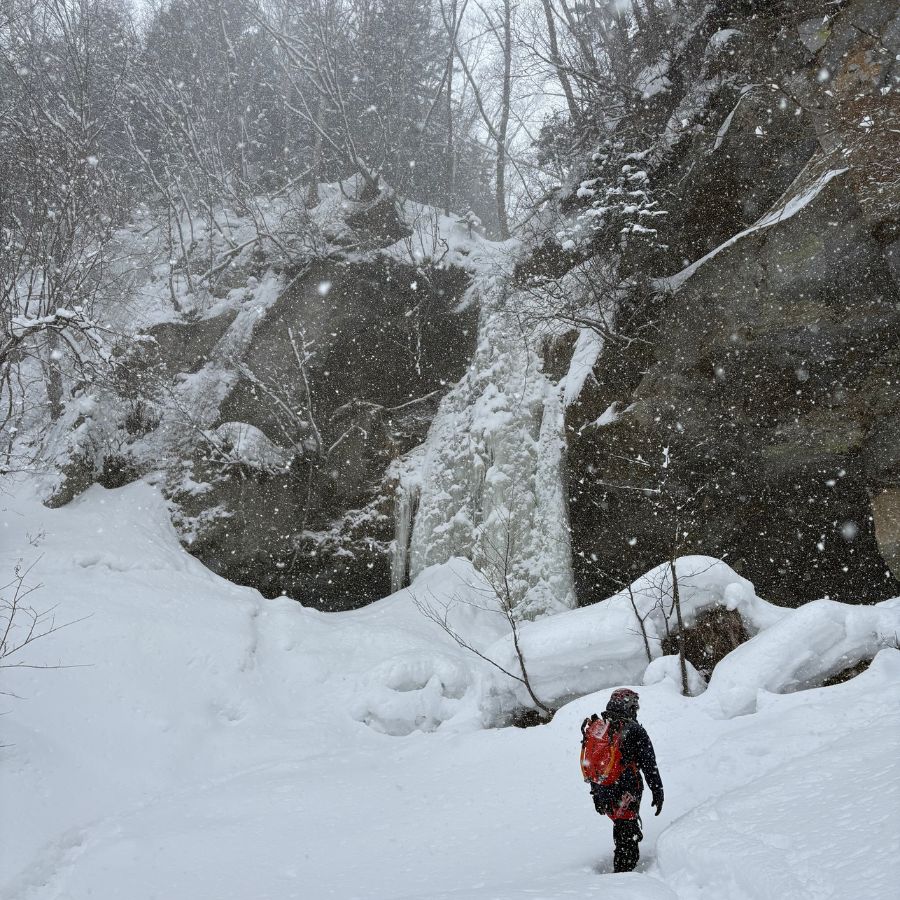
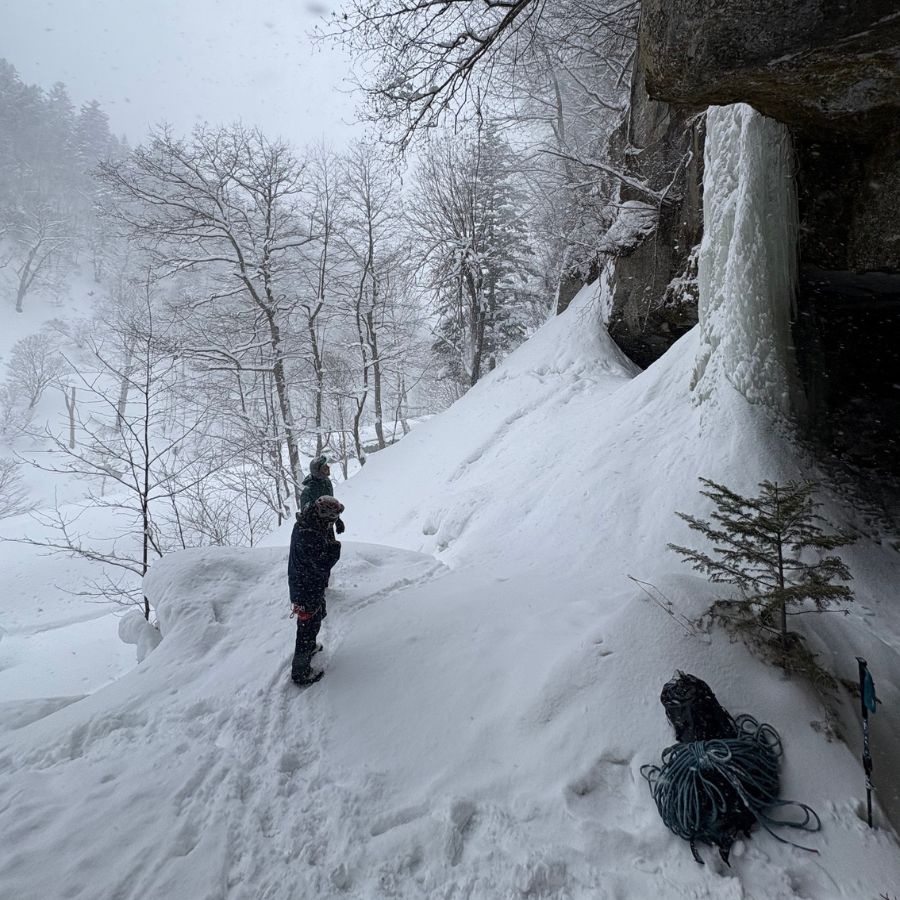
Instead of climbing a large frozen waterfall, we shifted to a smaller ice climbing spot nearby.
This
turned out to be a great opportunity to focus more on practicing and improving our ice climbing
techniques.
When we arrived at the parking area, we noticed several other cars already there. Many local
climbers were also out climbing, which surprised me. I did not realize how active the ice
climbing
community in Japan is.
What I enjoyed most about this day was the overall experience. As someone who enjoys walking and
hiking, I really appreciated the approach to the climbing area. Walking through the snowy
landscape
gave me a small taste of alpine-style climbing, which I found myself enjoying more than I
expected.
A More Technical Ice Climbing Day
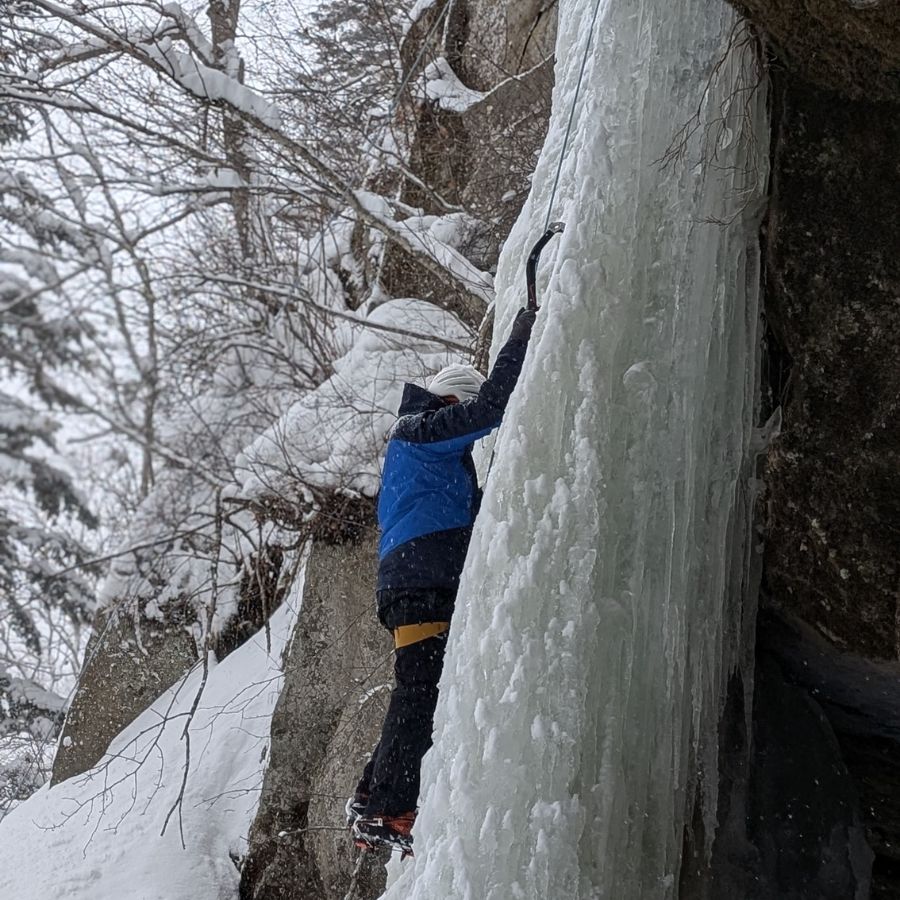
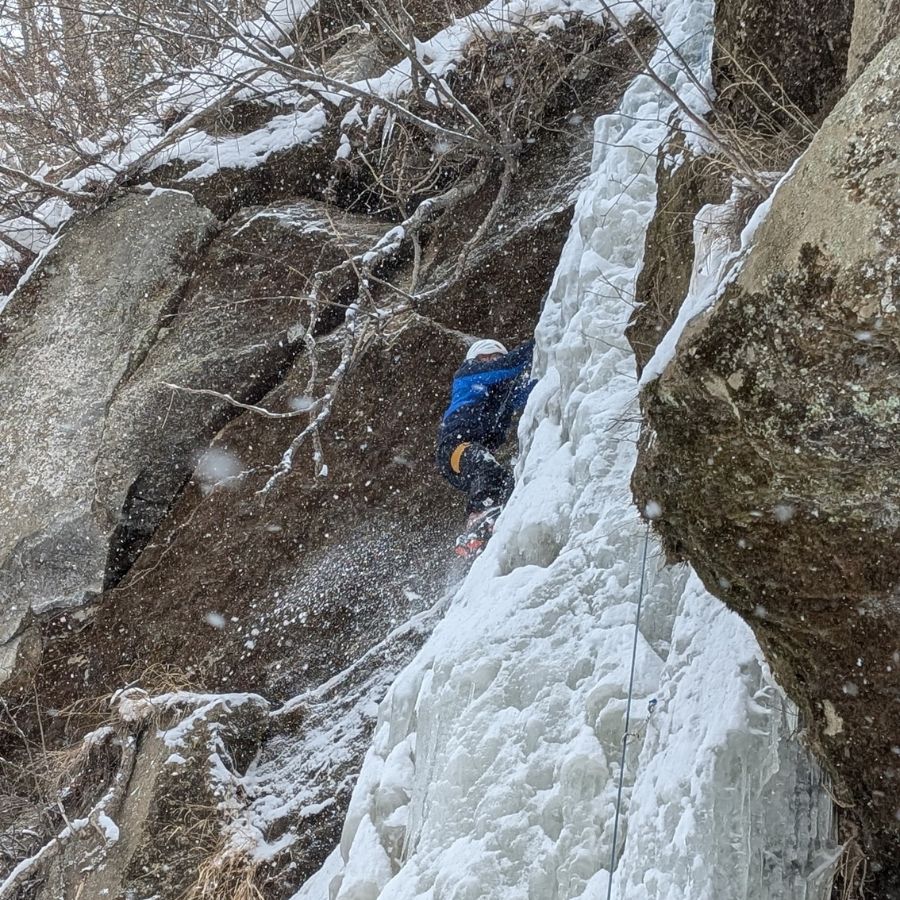
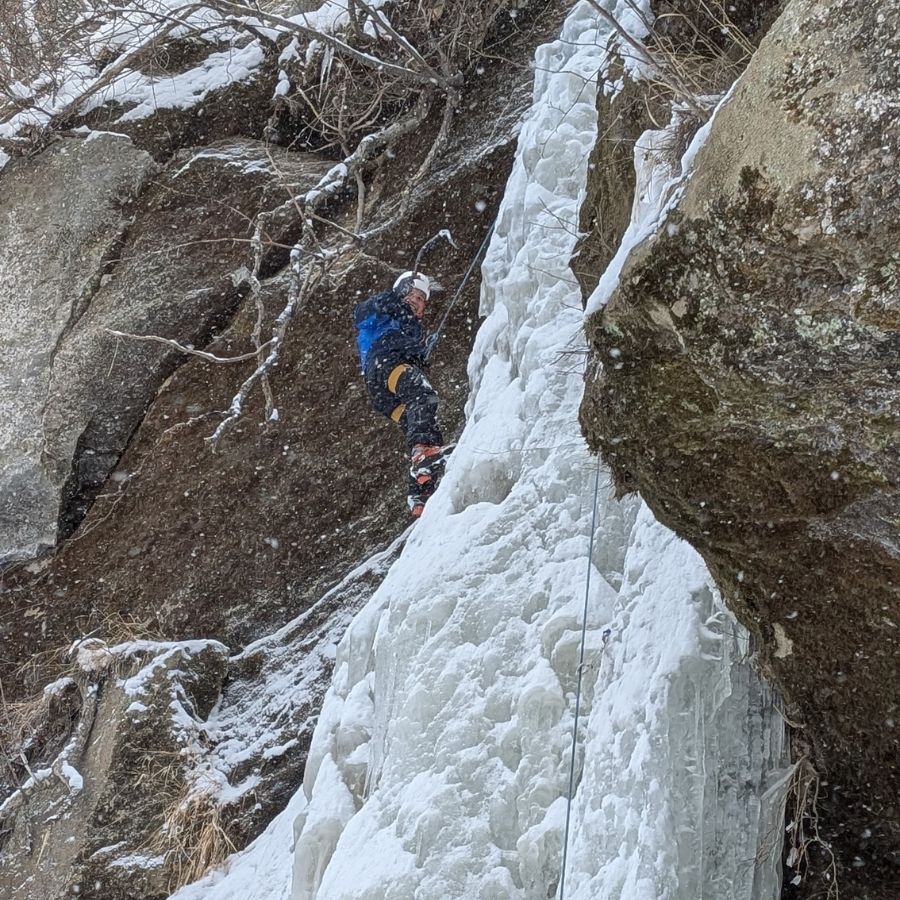
Compared to Day 1, the climbing on Day 2 felt less exciting but more technical.
We spent more time practicing how to properly use crampons and ice axes on real ice surfaces.
Instead of focusing on completing routes, we focused on building better technique and
understanding
movement on ice.
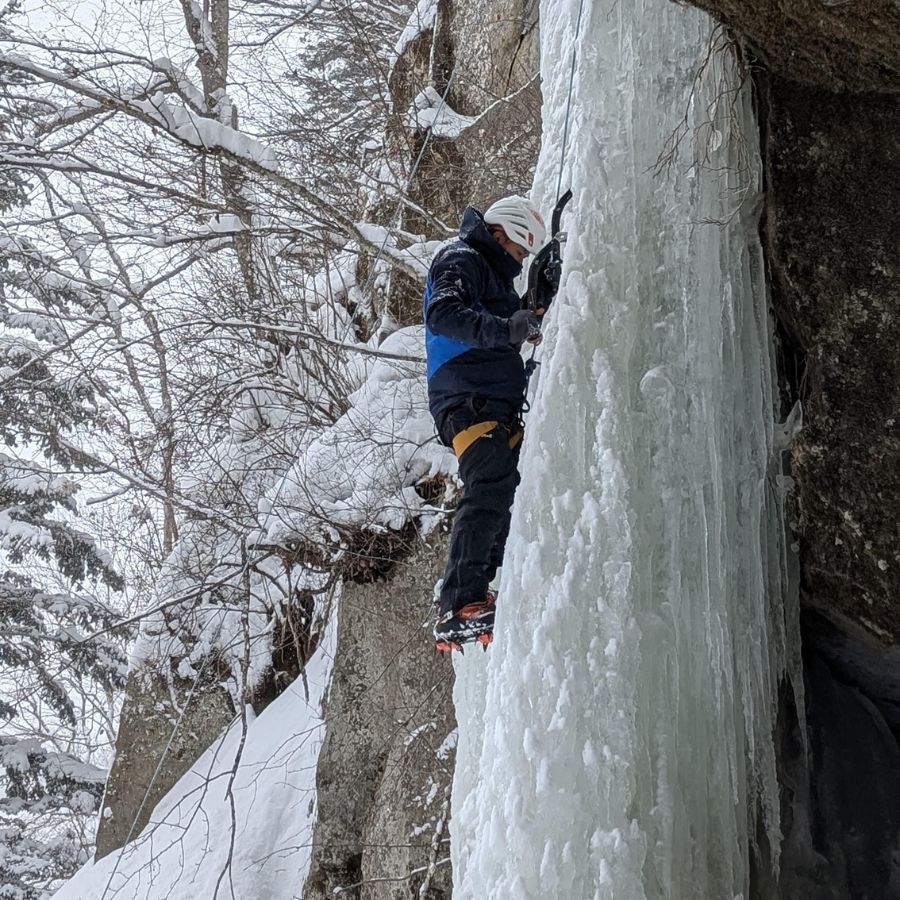
We still managed to complete a few climbs on the frozen waterfall. This one was actually more
challenging than the previous day because the ice had formed unevenly, with curved and irregular
surfaces that made it harder to place crampons securely.
Even though the climbing itself was more difficult, I really enjoyed the atmosphere.
Despite the cold weather, the snow-covered trees and quiet surroundings created a calm and
peaceful
environment. There was something about being in that winter landscape that felt very relaxing,
even
while climbing.
Final Thoughts on My First Ice Climbing Experience in Hokkaido
This two day ice climbing experience in Hokkaido was beyond what I expected.
I discovered a completely new type of climbing that felt very different from rock climbing, both
physically and mentally. From learning how to use crampons and ice axes to climbing frozen
waterfalls for the first time, every moment felt like a new challenge.
At the same time, this trip was not just about climbing. It also introduced me to winter hiking,
alpine-style movement, and the experience of being in a snowy mountain environment. It also gave
me
the chance to experience Japan in winter in a completely different way.
As someone coming from a tropical country, this was something completely new, and it opened my
eyes
to another side of outdoor adventure that I had never considered before.
Would I do it again?
Yes, definitely.
Ice climbing is challenging, sometimes uncomfortable, and requires preparation, but it is also
incredibly rewarding. Reaching the top of a frozen waterfall and looking out over the winter
landscape is an experience that is difficult to describe.
This trip made me realize how much more there is to explore in climbing, especially across
different
seasons and environments
Until then, keep climbing and keep exploring.
ByrdieOnTheRocks :)